Tag Archive for: Disaster Relief Resource Center

01 – The Purpose and History of WELS Christian Aid and Relief

WELS Christian Aid and Relief: A Ministry of Compassion

As we have opportunity, let us do good to all people, especially to those who belong to the family of believers (Galatians 6:10).

These inspired words from the pen of the great apostle help to guide the mission of WELS Christian Aid and Relief. That mission is simple: do good, assist those in need, help the helpless, reflect the compassion of Christ to people who are hurting. It’s a Fifth Commandment mission, a mission of helping and befriending our neighbor in every bodily need. We do this both for those who are closest to us, our brothers and sisters in the faith, and for those outside the church, those who don’t yet know Jesus as their Savior.

Whether those we are helping are from our fellowship or outside it, we want to do more than just help with bodily needs. We are a Means of Grace ministry. Our goal is to comfort them with the gospel, to share with them the peace that transcends all understanding, to lead them to know and trust in their Savior, Jesus Christ. As we strive to meet people’s physical needs, we also want to meet their spiritual needs by sharing with them the good news of the One who lived, died, rose for their salvation.

We carry out this ministry of compassion in three main ways: disaster relief, humanitarian aid, and personal financial grants for people who are experiencing a crisis.

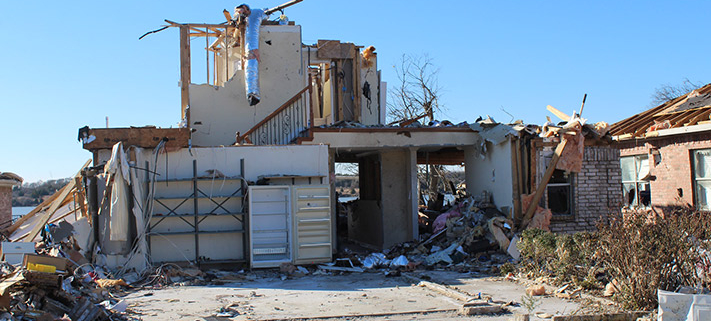
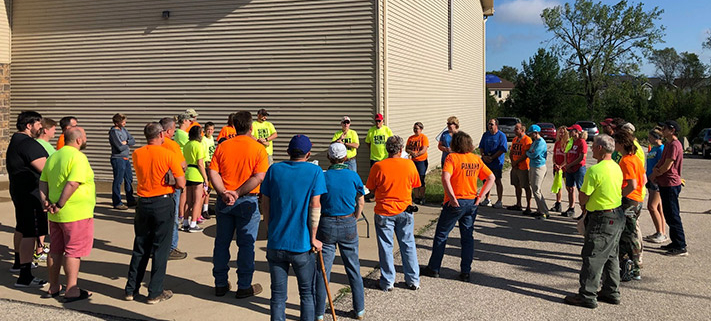
When there is a disaster – hurricane, tornado, fire, flood – we work through our local WELS congregation or mission to help the affected community clean up and get back to normal. We provide leadership, trained volunteer labor, funding, equipment, and coordination to help get the church and the neighborhood back on its feet. Since disasters can be so traumatic, we also spend a lot of time talking to people, listening to their stories, praying for them, and sharing with them the good news of Jesus.

In addition to disaster relief, we also partner with WELS Home and World Missions to provide Humanitarian Aid in mission settings at home and abroad. Such aid includes basic ongoing needs like food for the hungry, clean water for the thirsty, medical care for the sick, school supplies for underprivileged children, and a host of other basic life resources. Such compassion in action helps build relationships of trust between the local missionary and the people he serves and leads to many opportunities to proclaim the love of Christ.

Finally, we work with WELS churches and missions to aid people who are in crisis. It might be a child who needs surgery his parents can’t afford, or an elderly couple that need a new roof. In such cases we work with the local congregation or mission to raise the necessary funds and meet the need.

Brief History of WELS Christian Aid and Relief

WELS Christian Aid and Relief was formerly called “Committee on Relief.” The committee has operated as a five-person team of volunteers with a chairman, appointed by the synod president since 1946. It began after World War II to provide relief to war sufferers in Germany and Poland. In 1957 the committee expanded its mission to provide grants to congregations and individuals affected by disasters and other personal medical emergencies.

In 1998, the WELS Board for World Missions established a Humanitarian Aid Committee to oversee their humanitarian aid projects. These projects are intended to meet community needs and develop relationships to share the gospel with the unchurched people they serve.

At a special meeting (of the then Committee on Relief) in November 2009 a proposal to restructure the committee with the addition of a full-time layperson Director of Operations was approved.

In August 2010, a Joint meeting of the Committee on Relief and the Humanitarian Aid Committee of the Board for World Missions approved that the two committees would amalgamate into one new committee with the new name of WELS Christian Aid and Relief, responsible to the Synodical Council through the Synod President. This commission has a threefold emphasis – respond to natural disasters, provide financial grants to individuals facing medical or financial crisis, and support home and world mission humanitarian aid projects.

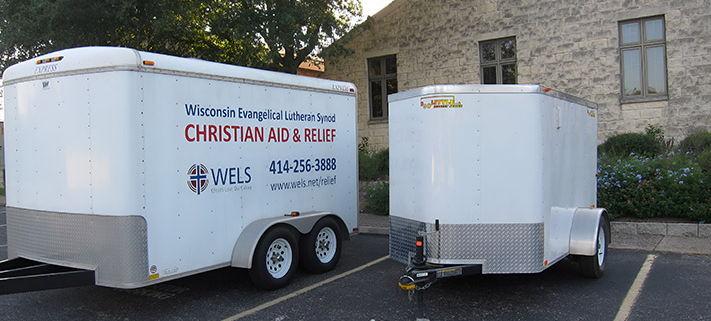
In addition to providing financial grants, WELS Christian Aid and Relief began recruiting and overseeing volunteers for disaster relief projects in 2001, with increased involvement after Hurricane Katrina in 2005 and the events of 9/11 in New York City. This includes recruiting volunteers to help make disaster assessments, coordinate relief efforts, and lead disaster relief trailer teams.

At its November 2019 meeting the Synodical Council approved calling a full-time pastor as Director of WELS Christian Aid and Relief with the goal of enhancing our disaster relief ministry by training WELS members to respond to disaster situations within their communities.

 

02 – Why Compassion Ministry?

Holy Scripture contains dozens and dozens of passages encouraging believers to be kind, helpful, hospitable, generous, merciful, and compassionate. Here are just a few examples:

  • Matthew 25:34-36:  “Then the King will say to those on his right, ‘Come, you who are blessed by my Father; take your inheritance, the kingdom prepared for you since the creation of the world.  For I was hungry and you gave me something to eat, I was thirsty and you gave me something to drink, I was a stranger and you invited me in,  I needed clothes and you clothed me, I was sick and you looked after me, I was in prison and you came to visit me.’”
  • Acts 2:44, 45: All the believers were together and had everything in common. They sold property and possessions to give to anyone who had need.
  • Romans 12:13: Share with the Lord’s people who are in need. Practice hospitality.
  • 1 Timothy 6:17, 18: Command those who are rich in this present world not to be arrogant nor to put their hope in wealth, which is so uncertain, but to put their hope in God, who richly provides us with everything for our enjoyment.  Command them to do good, to be rich in good deeds, and to be generous and willing to share.
  • James 1:27: Religion that God our Father accepts as pure and faultless is this: to look after orphans and widows in their distress and to keep oneself from being polluted by the world.
  • 1 John 3:16-18:  This is how we know what love is: Jesus Christ laid down his life for us. And we ought to lay down our lives for our brothers and sisters.  If anyone has material possessions and sees a brother or sister in need but has no pity on them, how can the love of God be in that person?  Dear children, let us not love with words or speech but with actions and in truth.

Martin Luther summarized the spirit of these passages in his explanation to the Fifth Commandment. Regarding our neighbor, he says, “Help and befriend him in every bodily need.” When we see our neighbor in need, whether he is a believing child of God or a callous unbeliever, we are to help him. The Spirit’s words given through Paul’s pen are clear: As we have opportunity, let us do good to all people, especially to those who belong to the family of believers (Galatians 6:10).

The discussion could end right there. However, considering the history of compassion ministry in the Wisconsin Synod, it seems wise to say a little more. Many WELS pastors remember the warning offered by well-meaning seminary professors: The mission of the church is to preach the gospel; be careful that you don’t get distracted by social programs. The term “social programs” was used as a synonym for what we today would call compassion ministry or mercy ministry. There was a reason for this warning. Many churches and church bodies have become distracted by efforts to “make the world a better place.” They have become so bogged down in various social programs and political agendas that the simple proclamation of law and gospel is scarce among them. Obviously, this is something we want to avoid.

However, it’s not a matter of doing one and leaving the other undone. It’s not an either/or situation but a both/and situation. God calls us both to proclaim his truth to the lost and to be kind and compassionate to those in need. He commands us to love our neighbor by caring for his needs, soul and body. Not only are these two directives not in conflict with each other, but one supports the other. Showing kindness and compassion to those in need often breaks down barriers and opens ears to the proclamation of the gospel. Jesus talked about this in his famous Sermon on the Mount: “Let your light shine before others, that they may see your good deeds and glorify your Father in heaven” (Matthew 5:16). Peter later echoed our Savior’s words: Live such good lives among the pagans that, though they accuse you of doing wrong, they may see your good deeds and glorify God on the day he visits us (1 Peter 2:12).

There’s an old saying that may be helpful here: People don’t care how much you know until the know how much you care. If people think that you don’t really care about them, they won’t listen to you. They won’t want anything to do with you. Who could blame them? But when they see in both your actions and your attitude a commitment to help them in their need, they are more willing to hear you out. A relationship of trust has been established. You have, in a sense, earned the right to talk to them. Then you can share with them, gently and respectfully, the reason for your hope in Christ (1 Peter 3:15).

So, why do we carry out a ministry of compassion? We don’t do it because it feels good, though it often does. We don’t do it to look better in the eyes of others, though caring for those in need certainly can improve one’s reputation. We don’t do compassion ministry for personal glory or selfish gain. We do it for the glory of God alone, in thanks for his compassionate love that saved us. We do it for the benefit of precious souls for whom our Lord Jesus willingly shed his priceless blood. In short, we show compassion because our God is full of compassion.

May the Lord in his grace bless our every effort to show compassion to those who need it!

03 – Disasters and Hazards

Disasters

Disasters are severe disruptions to the functioning of a community and exceed their capacity to cope when using internal resources. Disasters occur through natural, technological, and human-caused hazards and other factors that influence the exposure and vulnerability of a community, even your church community. Disasters can significantly impact you, your family, and your community by causing injury, death, economic loss, environmental loss, emotional and spiritual suffering, and other hardships. Disasters often require assistance from federal, state, and local governments and disaster relief organizations, like WELS Christian Aid and Relief.

Hazards

Hazards are those physical conditions that can cause fatalities, injuries, damage, and interruption to social order and are defined as sources of danger that may or may not lead to a disaster (NGA, 1982). Hazards are accompanied by an associated level of risk and the likely consequences should the disaster occur. When response capabilities exceed the capabilities of one or more response agencies, you have a disaster. Each hazard has distinct characteristics and is categorized into three groups.

Natural Hazards

Natural hazards result from hydrological, meteorological, seismic, geologic, volcanic, mass-movement, or other natural processes and threaten society. The following natural hazards are the most common, with the capability to cause significant damage:

  • Floods
  • Earthquakes
  • Hurricanes
  • Storm surges
  • Tornadoes
  • Wildfires
  • Mass movements (avalanches, landslides)
  • Tsunamis
  • Volcanic eruptions
  • Severe winter storms
  • Drought
  • Extreme temperatures
  • Thunderstorms
  • Hail

Technological Hazards

Technological hazards are a product of technological innovation and human development. These hazards tend to be much less understood than their natural counterparts. As technology advances, the number of associated disasters increases, and their scope expands. The most common technological hazards arise from systems and structures related to transportation, infrastructure, industry, and construction and include:

  • Structural fires
  • Transportation accidents
  • Infrastructure failures
  • Dam failures
  • Hazardous materials incidents
  • Nuclear accidents

Human-Caused Hazards

Human-caused hazards are incidents resulting from deliberate actions through which adversaries can carry out their activities and include the following:

  • Active shooter
  • Armed assault
  • Biological attack
  • Chemical attack
  • Cyber attack
  • Explosive attack
  • Improvised nuclear attack
  • Nuclear terrorism
  • Radiological attack


10 – Basic Safety Information for Disaster Relief Deployments

Thank you for serving as a WELS Disaster Relief volunteer! What a wonderful opportunity to help people in need and show them the love and compassion of Christ our Savior!

Working safely during deployment is important. Please read through the following guidelines and put them into practice!

Basic Safety

If you haven’t done so, please view our basic safety video.

  • When traveling to the worksite, be alert for any dangers including downed wires, logs or brush in the road, safety vehicles, etc. Streetlights and stoplights may not be working. Remember, you are entering a disaster zone. Take your time, be alert, and arrive safely.
  • Be sure to bring your completed Volunteer Medical Form with you. Put it in a sealed envelope with your name printed clearly on the front. This form will only be used in case of a medical emergency. It will be returned to you unopened or destroyed at the end of the deployment.
  • Please wear gloves while working. Safety glasses and helmets will be provided when needed.
  • Stay visible by wearing a WELS Disaster Relief T-shirt or safety vest (provided) when on the worksite.
  • No open-toed shoes. Steel-toed safety shoes are preferred.
  • Work at your own pace. Rest when tired. Do not try to match the pace of younger or fitter volunteers.
  • Hydration is important. Drink plenty of water. This is especially important in warm weather.
  • Stay alert to avoid possible accidents. Pick up logs and brush on walking paths. Inform fellow volunteers of stumps and other obstacles that they might trip on.
  • Stay clear of any downed wires. Assume that they are energized.
  • Watch out for snakes or other animals that may be hiding under brush, in water, etc.
  • Alert the Safety Officer of any injuries or illnesses.

Chainsaw Safety

  • All sawyers must meet with the Lead Sawyer each day before work begins. The time, place, and leader of this meeting will be announced.
  • Wearing safety gear is not optional. All sawyers must wear chaps, ear and eye protection, helmet, and gloves while using the chainsaw.
  • Do not approach the sawyer to clear brush until he has indicated it is safe to do so. In general, stay at least 10 feet from the sawyer while he is working.

Flood Relief Safety

  • Rubber gloves should be worn when removing debris from a flooded building.
  • Be careful when reaching into any water. It may contain sharp objects or other hazards.
  • In some situations, personal protective equipment (PPE) including a respirator may be required.

Engaging with People

  • Take time to introduce yourself to homeowners and let them know where you are from.
  • Be respectful of homeowners’ property and possessions.
  • If they would like to talk about their experience, please take the time to listen to their story. Living through a disaster is a traumatic experience. It helps survivors to talk about it.
  • Listen with R.E.S.P.E.C.T.
    • Repeat key phrases
    • Eye contact
    • Summarize
    • Probe for more information/clarification
    • Empathize
    • Concentrate
    • Take your time
  • Some phrases to avoid:
    • “I know what you’re going through.”
    • “Everything will be OK.”
    • “Many people have it worse.”
    • “This happened because . . .”
    • “Let me tell you about my experience.”
    • “You’ve got this!”

Dealing with Problems

Please encourage your fellow volunteers to work safely. Any concerns about safety or behavior should be reported to the Incident Commander.

Other Notes

  • Each day will begin with a devotion, safety briefing, and work assignments. The time and place for this will be announced.
  • Meals will be provided. Snacks and water will be available all day.
  • Breaks are mandatory. When a leader announces a break, work must stop.
  • Be respectful of leaders and follow their instructions.
  • Please return any tools or equipment at the end of the workday. Report any damage. Note any maintenance that needs to be performed.

04 – The Four Phases of Disaster Management

Mitigation

Mitigation consists of the activities designed to prevent loss. Mitigation efforts are intended to ensure that the least amount of damage and casualties occur due to disaster. Activities include those taken to avoid an emergency, reduce the chance of an emergency, or reduce the damaging effects of unavoidable emergencies, such as buying flood insurance for your home.

Preparedness

Preparedness ensures that if a disaster occurs, people are ready to get through it safely and respond to it effectively. This is done by training, information, preparation, drills, and exercises—efforts to minimize damage and lay the groundwork for response to an emergency or disaster. As disasters continue to impact us at an increasing rate, we must all take part in preparing and mitigating their impacts. Take time to develop a preparedness plan for you and your family, especially as a disaster relief volunteer who will be away from your home.

Response

Response is the capability to respond quickly and safely in time of disaster to save lives, protect property and the environment, and meet basic human needs immediately after a disaster has occurred. Responding safely to an emergency is essential and the time for you to put your preparedness plans into action. Seeking shelter from a tornado or turning off gas valves in an earthquake are both examples of response.

Recovery

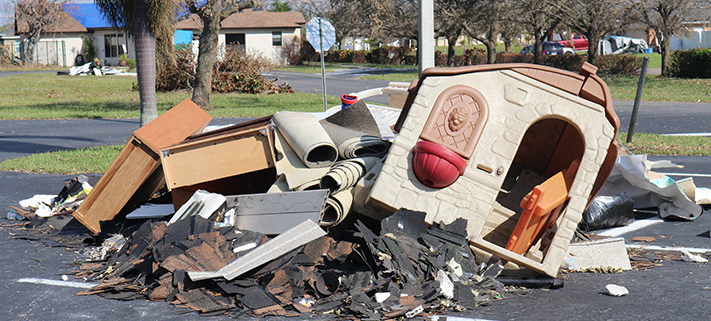
Recovery is the necessary capability to assist communities affected by disaster and to recover effectively and return to normal conditions. Recovery efforts include the restoration of basic services and the repair of physical, social, and economic damages. Typical recovery actions include debris cleanup, financial assistance to individuals and communities, rebuilding of roads and bridges and key facilities, and sustained mass care for displaced human and animal populations.

References

06 – How Your Church Can Help Following a Disaster

Prior Planning Prevents Poor Performance

It is vital for congregations to think about how they might help those impacted by a disaster before the disaster happens. This allows the congregation to plan procedures and gather resources to help with disaster relief efforts. A congregation should consider forming a Disaster Response Team to think through and plan for the congregation’s response to a disaster situation. The following information will help guide the congregation’s disaster response.

Important Questions to Ask

Immediately following a disaster, it’s important to gather accurate information. Local law enforcement and other first responders and governmental disaster response agencies (FEMA, Red Cross, etc.) can be good sources of information.

The following questions can be helpful:

  • What areas have been affected?
  • Is it safe to remain in those areas?
  • Who has been affected? Who lives and works there?
  • Have any members of the congregation been injured or killed? Have any of their homes been damaged or destroyed?
  • Has the disaster affected the water and food supply?
  • Is additional shelter necessary?
  • Have hospitals, pharmacies, doctors’ offices, or other healthcare infrastructure been compromised?
  • Will homebound residents be without oxygen, medication, or other needed medical supplies?
  • What are the unmet and underserved needs of the community?

Ideas for Congregational Response

Everyone, no matter their age or ability, can help with the congregation’s response to disaster. God has gifted his people with many talents and abilities. Sitting with someone who is hurting and providing a listening ear can be just as important as chain sawing downed trees, clearing debris from a neighbor’s yard, or mucking out a flooded basement.

Here are ten ways your congregation can provide aid following a disaster:

1. Pray.

Prayer is desperately needed in times of disaster. The Holy Scriptures tell us that the “prayer of a righteous person is powerful and effective” (James 5:16). Our compassionate God hears and answers the prayers of his people. Ask members of your congregation to pray for Christ’s mercy and wisdom. Pray for protection for first responders and all helping with disaster relief. Pray for the health and well-being of those who have lost property and perhaps even loved ones. Involve elderly and homebound members who are unable to run a chainsaw or muck out a basement. These seasoned believers are often well equipped to pray for Christ’s mercy and will do so faithfully.

2. Reach out and assess needs.

Once authorities have stated that it is safe to enter the area of disaster, select individuals to go in and assess the needs. A general assessment form can be found in the appendices of this manual. When it comes time to sit down and decide how best to help the community, these assessment trips will be invaluable. Please note that it is crucial that a congregation provides assistance based on what the community has said is needed rather than what the congregation thinks is needed.

3. Offer pastoral care.

This does not mean that the pastor is the only one who will be offering spiritual care. Ask a group of elders or other spiritually mature members to provide spiritual support to those impacted by a disaster. This will involve listening to their experiences, sharing the comfort of God’s Word with them, and praying with them. If church facilities are usable, the pastor may want to invite the community to a brief devotion or prayer service. Provide training to those who will serve on the pastoral care team. (Note: Those who have attended our basic training seminar have received such training.)

4. Be hospitable.

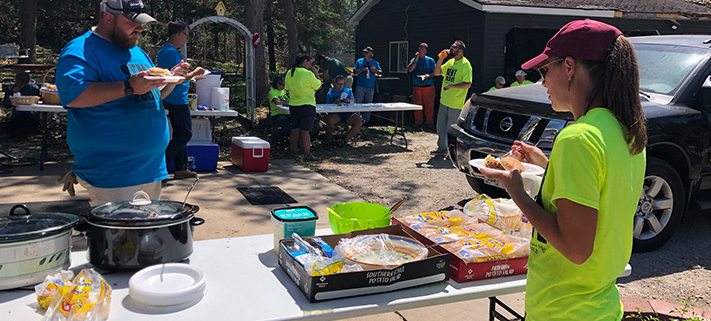
Form a group that can take food and clothing to survivors. It is important to provide meals where the survivors are located. People who have just been through a significant disaster event don’t want to travel five miles for a meal! Consider setting up a meal-serving station in or near the impacted neighborhood with grills, coolers, tables, etc. Perhaps some shade shelters could be set up to provide protection from rain and sun. Try to make the meals quick, easy, healthy, and filling so that people can get back to work quickly and have the energy to continue the task of sorting through their homes and belongings. Provide some granola bars, fruit, nuts, or other snacks that people can take with them.

5. Provide needed items.

Many items will be needed to bring aid and comfort to those who have survived the disaster. Food, bottled water, blankets, medical supplies, and other necessities can all be collected. However, usually the best donation following a disaster is a gift of money. Often donations of clothing and food end up being the “junk” that people don’t want any more rather than quality items that will serve the needs of survivors. Nothing lowers the morale of those who have just been through a disaster than receiving such “gifts.” Consider the purchase of gift cards (or prepaid debit or credit cards) that can be used at local merchants for purchasing food, clothing, personal, items, school supplies, etc. Such donations really make a difference for those who have been through a disaster by giving them the ability to purchase what they really need. This also can help to renew their sense of pride and self-worth, something that disaster survivors often struggle with. If the congregation has a strong desire to gather specific donations (blankets, warm coats, etc.), make sure the items are needed and of good quality. Also make sure that you have a clear plan for transportation and distribution of the items.

6. Provide temporary shelter.

You can prepare temporary lodging in a sanctuary, classroom, gymnasium, or other church facility. Make sure you have adequate bathroom and kitchen facilities for the number of people you plan to shelter. Purchasing some cots and sleeping bags can also be helpful. It’s probably a good idea to have responsible church members work in shifts of two to help with the needs of those being sheltered and to provide security. Use common sense. For more information, check out the Sheltering Handbook published by the American Red Cross [Sheltering Handbook (crcog.org)].

7. Help with salvage work.

Following a disaster, many survivors try to salvage all that they can from their destroyed home. What looks like trash to most can be a true treasure for them—scraps of letters, torn photos, broken dishes, etc. It is always a good idea to aid a homeowner who is going through his property. However, realize that this is a very personal act that is often filled with emotion. Only the homeowner can identify what is trash and what is treasure. So, be sure to confer with the homeowner before throwing anything away. What may seem like useless trash to us may have great personal, sentimental, or financial value to the homeowner.

8. Provide transportation.

Disaster survivors want to resume normal life—going to work, stopping at the store, etc.—as soon as possible. However, sometimes their vehicles are damaged, destroyed, or inaccessible. You might consider letting a disaster survivor borrow an extra vehicle so he or she can go to work and continue earning a paycheck. Or find individuals willing to drive people to work, the store, school, doctors’ appointments, etc. Retirees often have the flexibility in their schedules to provide this service. Be sure that loaned vehicles are in good repair and insured. Drivers should also carry insurance.

9. Provide daycare/babysitting.

It is wise to check local government rules and regulations for operating a daycare, but providing assistance with children following a disaster can be vital. It is simply not safe for small children to be around disasters. In addition, it’s hard on parents who want to give their attention to clearing debris and salvaging items from their homes when they also have to care for little ones. This is especially true of single-parent families. Consider providing a daycare or babysitting service free of charge. Retired members, teens, and others could be involved. You could even provide VBS-style crafts and stories for the kids. This will allow parents to work on their home or do other chores like replacing driver’s licenses and credit cards or simply making a trip to the bank.

10. Offer computer/internet access.

Today so many functions of life, such as paying bills and other financial transactions, are conducted online. During a disaster event, the loss of electricity, internet, or other basic infrastructure in impacted areas can make computer access difficult or impossible. If your church or school has electricity and functioning internet service, consider setting up a couple of computers for community use. An IT professional or technology-savvy person in your congregation can help you do this. Obviously, you will want to take steps to make sure that online safety and security is a priority for both the congregation and the computer users. Provide clear instructions for how to properly log in and log out. Keep it classy by giving users privacy while they are online. You might even provide cold drinks, hot coffee, and other snacks to make them more comfortable. Show them that you care!

07 – Some Thoughts on Donations

Often, compassionate Christians have the desire to donate items to help those in need. The following guidelines will help to ensure that disaster relief supplies do the most good for those who need them.

1. Financial contributions are often best.

Providing a financial contribution to a disaster relief agency is often the most efficient way to help those who are hurting. Disaster relief organizations have the experience, skills, and expertise to make the greatest and most positive impact on those whose lives have been disrupted by a disaster. These organizations are skilled in disaster assessment, disaster cleanup, mass feeding, mass shelter, first aid, crisis counseling, pastoral care, childcare, home repair, and many other areas. When people support these organizations (such as WELS Christian Aid and Relief) with financial contributions, it helps secure a steady flow of important services to survivors of a disaster.

There are other reasons that financial gifts make sense. Disaster organizations tend to spend money in or near the community impacted by disaster. This helps to support the local economy and local people who work in it. Cash donations avoid the complicated, costly, and time-consuming work of collecting, sorting, packing, transporting, unloading, re-sorting, storing, packaging, and distributing donated goods. Cash donations tend to meet people’s needs more precisely because the organization can purchase exactly what is needed in each situation. Cash donations also allow for vouchers so that people can provide for their own personal needs. And, of course, cash donations to registered non-profit disaster relief organizations are tax deductible.

We appreciate donations to WELS Christian Aid and Relief, which allow us to provide vital disaster relief operations through our congregations across the country and in our missions around the world. To donate go to wels.net/CARgift.

2. Used clothing is rarely a useful donation in a disaster relief situation.

Used clothing is usually not a helpful donation because it is hard to clean, sort, pack, store, and distribute. In addition, used clothing is of varying quality and condition and therefore doesn’t fit the needs of disaster survivors.

Statistics vary, but somewhere between 60 to 90 percent of used clothing donated for disaster relief ends up in the landfill. If you want to collect clothing, it might work better to have a yard or garage sale to sell the clothing. Then the proceeds can be donated.

3. Confirm the need before collecting donations of goods.

Again, financial contributions are almost always the best way to support disaster survivors and provide the goods and services they need. However, sometimes goods are collected. Before donating goods, it’s important to find out what is really needed. It is usually a mistake to assume what is needed. In the case of major disasters, relief organizations and state emergency management agencies often set up toll-free numbers and websites where the public can find out what goods are needed. In the past, vast quantities of goods have been wasted because there was no plan for distribution or they simply weren’t needed. Donors should be wary of those who say “everything is needed” in a disaster situation. This is almost never true. Do some research. Find out first.

4. Donate through a reputable organization.

It’s never a good idea to donate goods without knowledge of what goods are needed and a clear plan to deliver and distribute them. Experienced disaster relief organizations know how to assess what is needed, where it is needed, and when and how to deliver the needed supplies. They have the infrastructure and know-how to handle the influx of donated goods. Donating through a relief group helps to assure that the right goods in the right amounts are collected and delivered where they are needed most. Our advice: As always, it is best to donate cash. However, if you want to collect needed supplies, talk to a reputable disaster relief organization that is working in the area.

5. Plan transportation in advance.

When it comes to donations, planning how to get them where they need to be is crucial. Without proper planning, a donor can easily be stuck with a large amount of donated goods and no way to get them to those who need them. Do not assume that donated supplies will be delivered at no charge or at government expense. The donor has the primary responsibility for seeing that donations are delivered to the disaster area in a timely fashion. Transportation volunteers should be sought or money budgeted for this expense.

6. Donated goods must be well-packed and carefully labeled.

Once there is a plan in place to receive, store, and distribute needed goods, they must also be properly sorted, packaged, and labeled. If you are unsure how to do this, speak to an experienced disaster relief organization. Detailed packing labels should be affixed to each box of relief supplies. This helps with directing the goods to the right places.

09 – Volunteer Basics

What is it like to serve as a disaster relief volunteer? What should volunteers expect? What is expected of them? The following is intended to give you an idea of what serving as a disaster relief volunteer is like.

Volunteer Qualifications

In addition to being officially registered as a volunteer through our disaster relief website (welsdisasterrelief.org), which includes submitting to a background check, signing the liability waiver, and watching a brief basic safety video, volunteers should have the following qualifications.

Volunteers should be . . .

  • Physically fit and able to work long days. Not every volunteer will be running a chainsaw or moving heavy debris. Some will work in an office. Some will run errands. Some will cook and clean. All should be prepared for hard work and should be fit enough to do the work assigned to them.
  • Capable of following orders. It’s important for disaster relief volunteers to respect their leaders and carefully follow their instructions. This allows our relief efforts to be carried out safely and efficiently.
  • Flexible. Disaster relief is messy. Sometimes plans don’t work out. Volunteers need to be ready for changing plans and circumstances.
  • Servant-hearted. Jesus is both our motivation and example in this regard. He “did not come to be served, but to serve” (Matthew 20:28). Let volunteers serve with a Christ-like heart, always looking to the needs of others before their own.
  • Good listeners. Disaster survivors have lived through a traumatic experience. As they process that experience, they may want to talk. Volunteers should be ready to stop working and listen to the stories of those whom they are serving. Silence is golden. “Everyone should be quick to listen, slow to speak” (James 1:19).
  • Patient. Progress in disaster relief work is often slow. Sometimes projects are delayed due to lack of access, supplies, equipment, and other factors. This can be frustrating to those who are used to getting things done. Be prepared to wait.
  • Respectful of people, property, and privacy. Disaster survivors are going through a difficult time. Be patient and understanding. Give them some space if needed. Often, precious, valuable, and sentimental property has been scattered or destroyed. Even if something seems like a loss, it may hold precious memories for someone. Ask before throwing anything away. Also ask permission before taking any photos of people or damaged property.
  • Careful communicators. The aftermath of a disaster can be overwhelming. Often survivors of disasters ask volunteers for information about what to do or how to get assistance. Before giving any advice, make sure that the information about available resources and aid is true and accurate. Don’t share rumors.
  • Prepared to share their faith. Disaster survivors are hurting. They are often confused, overwhelmed, and hopeless. Christian relief volunteers are uniquely positioned to share the hope of Christ. The apostle Peter instructs: “Always be prepared to give an answer to everyone who asks you to give the reason for the hope that you have. But do this with gentleness and respect” (1 Peter 3:15).
  • Humble and compassionate. Disaster relief volunteers don’t expect favors or preferential treatment. They don’t look for others to accommodate them. Instead, they put the needs of others first. A volunteer should strive to exhibit the fruit of the Spirit: love, joy, peace, forbearance, kindness, goodness, faithfulness, gentleness, and self-control (Galatians 5:22-23).
  • Ready to work with a partner or team. Disaster relief work is hard. It can be dangerous too. Volunteers should be ready to use the “buddy system” to care for and encourage one another. No one works alone.
  • Prepared for challenging circumstances. Disasters are ugly. The mess they leave behind can be devastating, not only to those who may have lost property, home, and loved ones, but to those who are serving them. Seeing so much pain, destruction, sorrow, and loss takes a toll psychologically, emotionally, physically, and spiritually. Volunteers should expect to see and experience anger, sorrow, grief, disappointment, inconsistency, helplessness, and bewilderment. Those who have survived disasters are often numb and just don’t know what to do. Volunteers should focus on God’s promises. He is present in suffering, always working for the eternal good of his people (Romans 8:28). He promises to sustain them through the trials and suffering of this broken world.
  • Committed to rest and self-care. It has been said that you can’t get any water from an empty pitcher. Volunteers need to take care that they don’t pour out so much of themselves that there is nothing left. Volunteers should take regular breaks, drink plenty of water, and eat nutritious food. They should prioritize time for sleep and activities that bring joy. Prayer and time in the Word bring renewed strength and vigor like nothing else can. Overuse of alcohol should be avoided.

11 – Engaging with Disaster Survivors

After a disaster, survivors are numb. They don’t know what to do or even where to start. They are at a loss emotionally, physically, and spiritually. The devastation caused by a disaster, the loss of property, the injury or death of friends and family can make it hard for people to even think straight. Here are some ways that volunteers can provide care for disaster survivors.

Do!

  • Take time to introduce yourself to homeowners. Let them know that you are part of a group of volunteers from the local WELS congregation. Share the name of the congregation.
  • Be respectful of homeowners’ property and possessions.
  • If they would like to talk about their experience, please take the time to listen to their story. Living through a disaster is a traumatic experience. It helps survivors to talk about it.
  • Listen carefully.
  • Know that silence is golden. Listen more than you speak (James 1:19).
  • Be sensitive to differences in culture, religion, race, or language.
  • Speak the truth in love.
  • Keep your answers simple.
  • Provide clarification.
  • Follow a simple guide for good listening. Listen with R.E.S.P.E.C.T.
    • Repeat key phrases
    • Eye contact
    • Summarize
    • Probe for more information/clarification
    • Empathize
    • Concentrate
    • Take your time
  • Recognize signs of stress in survivors.
    • Normal signs of stress:
      • Feelings can include sadness, guilt, anxiety, loneliness, abandonment by God, numbness, fatigue, helplessness, shock, and anger.
      • Physical reactions can include tightness in the chest and throat, over-sensitivity to noise, shortness of breath, weakness in the muscles, lack of energy, and dry mouth.
      • Thoughts can include confusion, preoccupation, despair, and irrational cognition.
      • Behaviors can include changes in sleep (too much or too little, dreams about the trauma), changes in appetite (too much or too little), wandering around, forgetting what you are doing, social withdrawal, restless over-activity, crying, and suppressed crying.
    • Signs of stress that indicate a need for intervention by a trained professional such as a pastor or counselor:
      • Continuing exclusion of family, friends, or activities.
      • Prolonged feelings of emptiness or worthlessness.
      • Having thoughts of or articulating a plan for self-harm.
      • Abuse of alcohol, prescription drugs, or illegal drugs.

Don’t!

  • Spread rumors. Rumors can lead to feelings of insecurity and even panic. Make sure that the information you share is accurate.
  • Do not promise anything you personally cannot deliver.
  • Some phrases to avoid:
    • “I know what you’re going through.” In most situations this is simply not the case.
    • “Everything will be OK” or “You’re strong” or “You’ll get through this.” After a disaster many are questioning their strength and ability to make it through a situation. It’s better to direct them to the promises of a loving and mighty God.
    • “Many people have it worse.” This is not really comforting. Even though others may have a worse situation, the person you’re talking to still has a tough situation to live through.
    • “Let me tell you about my experience.”
    • “Don’t cry.” It’s OK to cry. Sometimes it’s even helpful to release pent-up emotion.
    • “This happened because . . .” or “It’s God’s will.” Making a statement like this can anger those who have survived disaster.
    • Instead of providing comfort, these phrases can cause anger or resentment. That in turn makes it hard to engage with them and share the gospel.
    • If you say something that upsets them, apologize sincerely and try to keep the conversation going.


12 – Self-Care for Volunteers

Disasters are tough on those who have lived through them and are trying to pick up the pieces of their lives. Disasters are also tough on those who are trying to bring relief and care for the hurting. As a volunteer, your spiritual, emotional, mental, and physical well-being can easily be overlooked. Failure to take care of yourself can lead to increased anxiety, stress, doubt, and fear. You won’t be able to care for someone else if you are exhausted.

The following coping strategies will help you to care for yourself so that you can care for others.

Spiritual Coping Strategies

  • Pray. God hears and answers. Jesus promised, “Ask and it will be given to you; seek and you will find; knock and the door will be opened to you” (Matthew 7:7).
  • Read Scripture and other devotional materials. Follow a daily readings plan. Recall and meditate on a favorite passage. Use devotional books like Meditations. Be in the Word.
  • Sing hymns. Music carries truth to the heart. Try to recall and sing favorite hymns or spiritual songs.
  • Spend time with fellow believers. Spend time with your faith community. Talk to your pastor, your spouse, your family members, your friends at church. Join with others in worship and Bible study as much as you can.

Emotional Coping Strategies

  • Talk to a trusted friend. Share your feelings and fears. Be honest about how you are doing.
  • Find time for enjoyable activities on your own or with family and friends. Take a walk. Read a book. Spend a couple of hours fishing. Watch a movie. Engage in a hobby. Do whatever you usually do to relax.
  • Journal. Sometimes writing things down can help us to process our feelings. Be honest with yourself. Write down what you’re thinking no matter how raw the emotions may be. Write out your prayer concerns. Go back and look at what you wrote and thank God for his answer to your prayers.
  • Understand anger. Anger is a common emotion for people who have been through a disaster or are helping those affected by disaster. Anger often exists on the surface but is really covering up deeper emotions like fear, anxiety, or deep feelings of loss. Ask what’s really making you angry. Write down your thoughts. Talk with a trusted friend, counselor, or pastor about it. Pray about it. Be careful not to take out your anger on others. Tell them you are feeling angry and ask for their prayers, help, and support.

Mental Coping Strategies

  • Use Psychological First Aid (PFA)—for others and yourself. PFA principles (safety, calm, connectedness, self-efficacy, hope) apply both when supporting volunteers and checking in on teammates. For more information about PFA: Psychological first aid.
  • Know the facts. Be informed. Learn information about the disaster from reliable sources. Avoid rumors. When talking to others share only information you have confirmed to be true.
  • Know the signs of stress. Watch for sleep disturbance, irritability, intrusive images, numbing, substance abuse, or withdrawal. Early recognition lets you act before problems get worse.
  • Use short, routine grounding practices. Breathing exercises, brief mindful pauses, or five-minute walks help reset arousal between tasks.
  • Take advantage of peer support and structured debriefs. Daily debriefs, “hot” debriefs after serious incidents, and formal post-shift check-ins reduce isolation and normalize reactions.

Physical Coping Strategies

  • Adequate rest is the foundation of stress management. Establish a repeatable rhythm and routine to the day, take regular breaks, and get to bed at a reasonable hour.
  • Exercise is great for mitigating stress. It can also help with sleep. Be sure to check with your doctor before beginning any exercise routine. Note: Many volunteers will get plenty of exercise during the workday. However, those who aren’t doing physical labor will want to make a plan to get some exercise.
  • Nutrition. Eat well-balanced and regular meals.
  • Find time for enjoyable activities on your own or with family and friends. Take a walk. Read a book. Spend a couple of hours fishing. Watch a movie. Engage in a hobby. Do whatever you usually do to relax.
  • Avoid alcohol and drugs as a means to cope. Use only non-prescription drugs (Advil, Tylenol, etc.) or those prescribed by your doctor.

05 – Preparing for Disaster

Disaster preparedness begins at home and with each one of us. Planning is an essential part of readiness. Having plans that cover multiple situations and events is very useful during times of disaster. Plans should include emergency communications, how we receive alerts and warnings, evacuation routes, emergency kits, supplies, and regular training to ensure that members and leaders stay updated to compensate for our changing world, environment, and personal situations. Our planning should include how we will protect ourselves and our property and how we will manage risk. The benefits of being prepared and planning for disasters are many, and taking action to protect yourself, your family, and your congregation will have long-lasting effects on your community well into the future.

Are You Ready?

Readiness starts with us being prepared when disaster strikes. As individuals and Christians, we must be spiritually, emotionally, and physically prepared. Often disasters occur when we are not at home or with our families, so we must be prepared. Having a personal evacuation plan for your specific and frequented locations (like work, gyms, and grocery stores) and other critical information needed to get you safely and quickly back to your family is essential. Have a kit/go-bag with enough supplies to sustain you until you can reunite with your family. Your kit should have at least three days of supplies, including water, food, medications, and critical documents—like medical cards, cash, and other items to sustain you (see appendix for details).

Actions to keep you prepared for disaster include having the right skills to react quickly to situations, so take time to review publications like FEMA’s “Are You Ready?” guide and websites like Ready.gov to learn how you can prepare.

Family Readiness

To prepare you and your family for a disaster, it’s essential to consider the needs of children, the elderly, and those with disabilities. Ensure your plans and checklists are up to date and contain the necessary contact information and essential information like evacuation routes, gathering places, and pet safety plans. Ensure your family kit can sustain you for up to two weeks. Additional considerations include how you and your family will receive warnings and alerts, shelter-in-place procedures, family reunification plans, and other key areas you and your family may identify when planning. Finally, review and practice your plans regularly to ensure they are sufficient for the types of disasters you may encounter in your area. Whether it’s your hometown or your vacation, planning for a disaster is essential.

Congregational Preparedness

Now that we have prepared ourselves and our families for a disaster, we can spend time preparing our house of worship and congregational family for a disaster. The first step in preparing your congregation is to understand that it is a process that will require time and effort to design, implement, and maintain. The congregational planning process should be flexible, adaptable, and designed to meet the hazards your congregation could face. Using the six-step planning process outlined in FEMA’s Guide for Developing High-Quality Emergency Operations Plans for Houses of Worship, your congregation can create a comprehensive plan to meet any disaster you may encounter.

The Planning Process

Step 1: Form a Collaborative Planning Team

In Step 1, a congregation should create a core team to ensure it is ready to respond to threats, hazards, and disaster impacts. The core team should be small enough to permit close collaboration and large enough to include community stakeholders. Look around your congregation for people with the skills and an understanding of how the church functions as well as an understanding of disaster preparedness, response, and recovery. Members might consist of a nurse, firefighter, police officer, member of the property committee, someone involved in church finances, and those engaged in children’s ministry. Once the team is formed, roles and responsibilities should be assigned, along with establishing a regular meeting schedule until the plan is complete. Many of our WELS congregations are small or located in rural areas, with members spread out over many miles and communities, while others are large and in large urban areas or cities. This may help when determining roles and responsibilities.

Step 2: Understand the Situation

This step allows the team to identify possible threats and hazards confronting the congregation and look at vulnerabilities from those threats and hazards to understand the threats facing their congregations and their surrounding communities. Upon identifying and prioritizing threats and hazards, it is time to look at the risks and the probability that they could occur, impacting their congregation’s ability to worship and carry out other ministry activities.

Step 3: Determine Goals and Objectives

Once a threat and hazard analysis has been completed, the planning team will decide which threats and hazards to include in the plan. Now it’s time to develop goals and objectives for those hazards, outlining desired outcomes before, during, and after disaster strikes. This is also the stage in planning where you want to identify critical functions like your facility’s evacuation procedures and develop goals and objectives with desired outcomes. While we often spend much of our planning time and efforts on preparedness and response, it is essential to focus on short- and long-term recovery, such as emotional and spiritual care. Crisis intervention and identifying potential new worship locations are all critical areas when determining goals and objectives.

Step 4: Plan Development

In Step 4, it’s critical to develop courses of action to accomplish each identified objective from Step 3 and include how you will respond under specific situations and how each response will be implemented by the congregation and across the life of the disaster. Since disaster can occur anytime, this is an excellent time to consider forming a response team made up of key decision makers such as council members and ministry staff, and those who have knowledge of church-critical areas such as insurance policies, media relations, and community liaisons.

Continuity of Ministry

One of the most critical areas to consider in the planning process is the continuity of ministry and how we can ensure critical ministries and functions will continue in the event of a disaster. Perhaps your pastor has been impacted by the disaster and cannot lead worship. Who will plan and lead worship until a vacancy pastor can be called or your pastor recovers? The church response team must understand the challenges and opportunities to its ministries and ensure that adequate measures and resources are available to support both. Consider what the challenges would be if a disaster should affect your pastor. Who would lead worship, or how would you request support from the synod or a sister congregation? Would your education programs continue without interruption or shut down indefinitely for lack of a plan?

Step 5: Plan, Preparation, Review, and Approval

A church plan should be easy to understand and implement while supporting local and state emergency operations plans. Achieving this outcome requires the use of plain language and visual cues tailored to meet your church’s needs. All formats should include a basic plan, functional annexes, and hazard-specific annexes to ensure all goals and objectives have been addressed. At this point, the planning team should develop a draft plan, present it to the congregation for approval, and discuss its implementation.

Step 6: Plan Implementation and Maintenance

Everyone in your congregation will be involved in the plan, one way or another, based on the level of responsibility outlined in the plan’s requirements. Plans require both implementation and maintenance. An initial meeting should be held to outline roles and responsibilities across the congregation, and at a minimum, additional meetings should be held once a year to ensure the plan is still current, to update and post signs, brief new members, inform community stakeholders, and provide copies of the plan as needed. Other critical times to consider when maintaining and updating your plan are during post-disaster after-action reviews, when guidance and standards change, when hazards change, and when new threats are identified.

Training and Exercises

Your church emergency plan should also include a training and exercise program. The training program should consist of training on the plan itself and the equipment, tools, and resources the church will use during its implementation. A good exercise program includes key church personnel, emergency management officials, local responders, and other community stakeholders. Exercise formats include tabletop exercises, drills, and functional and full-scale exercises, all of which should be conducted at the church’s facilities, considering the costs and benefits of a particular exercise.

Conclusion

During times of disaster our communities and congregations come together, and our churches become areas of refuge where WELS members and the community, in general, will go to seek food and shelter and spiritual guidance. This will happen whether we are ready or not. Congregations are not alone and can reach out to WELS Christian Aid and Relief for assistance and resources. As congregations, being prepared will allow us to maintain and continue our ministries to assist those in need in our church and our communities, sharing the gospel with all those in need.