
12 – Self-Care for Volunteers
Disasters are tough on those who have lived through them and are trying to pick up the pieces of their lives. Disasters are also tough on those who are trying to bring relief and care for the hurting. As a volunteer, your spiritual, emotional, mental, and physical well-being can easily be overlooked. Failure to take care of yourself can lead to increased anxiety, stress, doubt, and fear. You won’t be able to care for someone else if you are exhausted.
The following coping strategies will help you to care for yourself so that you can care for others.
Spiritual Coping Strategies
- Pray. God hears and answers. Jesus promised, “Ask and it will be given to you; seek and you will find; knock and the door will be opened to you” (Matthew 7:7).
- Read Scripture and other devotional materials. Follow a daily readings plan. Recall and meditate on a favorite passage. Use devotional books like Meditations. Be in the Word.
- Sing hymns. Music carries truth to the heart. Try to recall and sing favorite hymns or spiritual songs.
- Spend time with fellow believers. Spend time with your faith community. Talk to your pastor, your spouse, your family members, your friends at church. Join with others in worship and Bible study as much as you can.
Emotional Coping Strategies
- Talk to a trusted friend. Share your feelings and fears. Be honest about how you are doing.
- Find time for enjoyable activities on your own or with family and friends. Take a walk. Read a book. Spend a couple of hours fishing. Watch a movie. Engage in a hobby. Do whatever you usually do to relax.
- Journal. Sometimes writing things down can help us to process our feelings. Be honest with yourself. Write down what you’re thinking no matter how raw the emotions may be. Write out your prayer concerns. Go back and look at what you wrote and thank God for his answer to your prayers.
- Understand anger. Anger is a common emotion for people who have been through a disaster or are helping those affected by disaster. Anger often exists on the surface but is really covering up deeper emotions like fear, anxiety, or deep feelings of loss. Ask what’s really making you angry. Write down your thoughts. Talk with a trusted friend, counselor, or pastor about it. Pray about it. Be careful not to take out your anger on others. Tell them you are feeling angry and ask for their prayers, help, and support.
Mental Coping Strategies
- Use Psychological First Aid (PFA)—for others and yourself. PFA principles (safety, calm, connectedness, self-efficacy, hope) apply both when supporting volunteers and checking in on teammates. For more information about PFA: Psychological first aid.
- Know the facts. Be informed. Learn information about the disaster from reliable sources. Avoid rumors. When talking to others share only information you have confirmed to be true.
- Know the signs of stress. Watch for sleep disturbance, irritability, intrusive images, numbing, substance abuse, or withdrawal. Early recognition lets you act before problems get worse.
- Use short, routine grounding practices. Breathing exercises, brief mindful pauses, or five-minute walks help reset arousal between tasks.
- Take advantage of peer support and structured debriefs. Daily debriefs, “hot” debriefs after serious incidents, and formal post-shift check-ins reduce isolation and normalize reactions.
Physical Coping Strategies
- Adequate rest is the foundation of stress management. Establish a repeatable rhythm and routine to the day, take regular breaks, and get to bed at a reasonable hour.
- Exercise is great for mitigating stress. It can also help with sleep. Be sure to check with your doctor before beginning any exercise routine. Note: Many volunteers will get plenty of exercise during the workday. However, those who aren’t doing physical labor will want to make a plan to get some exercise.
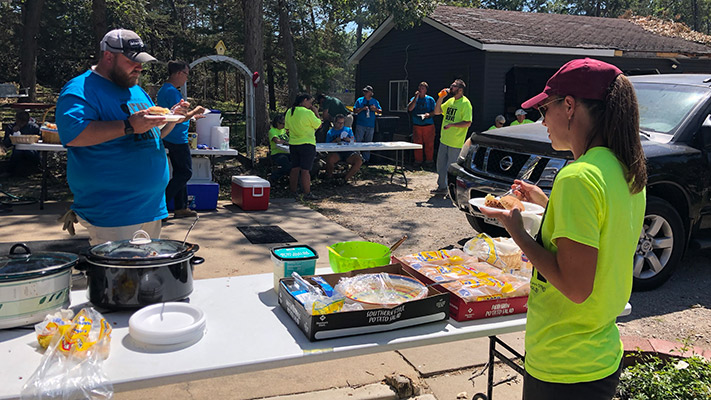
- Nutrition. Eat well-balanced and regular meals.
- Find time for enjoyable activities on your own or with family and friends. Take a walk. Read a book. Spend a couple of hours fishing. Watch a movie. Engage in a hobby. Do whatever you usually do to relax.
- Avoid alcohol and drugs as a means to cope. Use only non-prescription drugs (Advil, Tylenol, etc.) or those prescribed by your doctor.
