Karibu Kenya
Read how students from Wisconsin Lutheran High School, Milwaukee, Wis. and Martin Luther College, New Ulm, Minn. experienced the joy of Christian fellowship with our sister church in Kenya.
āGod, why?ā
You ask that. We ask it in Africa too.
Why this hardship? Why so much woe? Why does progress seem so slow? Our recent bachelor of divinity (BDiv) cohort wrestled with such questions.
In 2020 the COVID-19 pandemic began spreading. That year, experienced African pastors started studying together. The graduates had hoped for BDiv degrees from Wisconsin Lutheran Seminary. All in the group held theological diplomas.

Our cohort came from five countriesāCameroon, Kenya, Malawi, Nigeria, and Zambia. We began with gratitude. God had expanded the program beyond two countries. He had brought together pastors from across Africa. Yet concerns followed.
Why couldnāt we meet in person at first? Why did some pastors drop out? Why did some participants face serious hardships along the way?
Paul knew. He and Timothy thought they would die. God, why? Paul wrote, āThis happened that we might not rely on ourselves but on God, who raises the deadā (2 Corinthians 1:9).
Paul was describing Godās stunning way. By letting our strength fail, God leads his children to depend on his grace alone. Our African brothers learned that lesson repeatedly during six years of study.
Twice each year we gathered for short courses. Paul Nitz helped us become better listeners. Seminary professors Dave Bivens, John Schuetze, and Brad Wordell guided us into Godās Word. Al Sorum led us in street evangelism. Ken Cherney Jr. helped us see better the Spiritās power.
We clapped and sang together. We prayed together. We studied together. We became brothers.
Along the way, we shared each otherās burdens. Ministry in Africa presents many challenges. Pastors face alcoholism, polygamy, syncretism (combination of forms of belief or practice) and tribalism in their communities. God, why? Financial pressures abound. God, why?

Some of our brothers endured especially painful trials. One pastor needed a second hip replacement after the first surgery failed. Another graduateās wife nearly died from severe bleeding. God, why?
We kept seeing it. āThis happened that we might not rely on ourselves but on God, who raises the dead.ā Then, on May 28, 2026, we saw more.
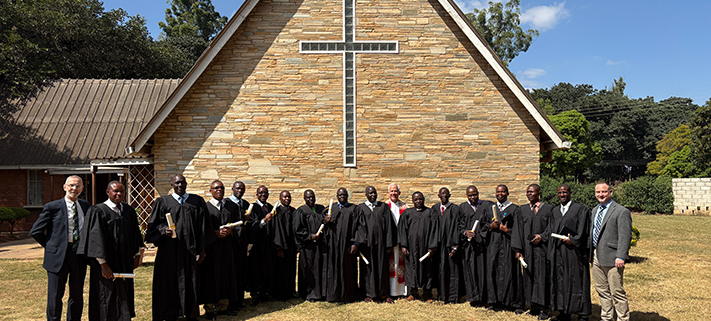
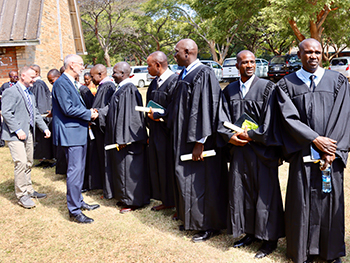
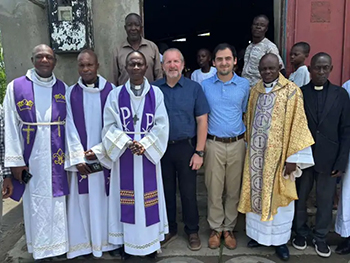
Fifteen graduates processed into the Lutheran seminary chapel in Lusaka, Zambia. We belted out, āOn Christ the solid rock I stand, all other ground is sinking sand.ā
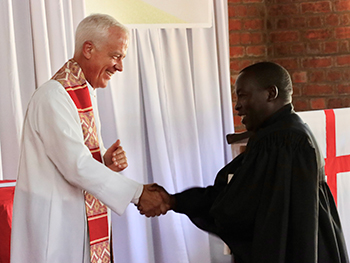
Skip Goetzinger, director of Wisconsin Lutheran Seminaryās Pastoral Studies Institute, urged us, āPreach the wordā (2 Timothy 4:2).
A local youth choir sang in Bemba, and the congregation worshiped in Chewa, English, and Swahili. Church leaders from Cameroon, Kenya, Nigeria, and Zambia swelled our joy.
Soon afterward, the graduates boarded buses and planes for long journeys home.
To easier ministries now? No. As Paul says, there are still āconflicts on the outside, fears withinā (2 Corinthians 7:5). Yet these pastors return home with love for each other. They have greater biblical knowledge, stronger skills, and new confidence in Christ.
One Kenyan graduate expresses the cohortās gratitude: āEvery day, as I prepare sermons and Bible study lessons, I am reminded of the invaluable knowledge and wisdom you imparted to us during our bachelorās studies.ā

These graduates are more ready when others ask, āGod, why?ā
In every hardship, God teaches his children not to rely on themselves, but on him, āGod, who raises the dead.ā
The same Shepherd who carried these pastors through six challenging years now sends them out again to preach Christ crucified, risen, reigning, and returning.
Godās answer to every āWhy?ā is Jesus.
Written by Dan Witte, missionary for the One Africa Team in Lusaka, Zambia
Learn about the ministry work of WELS Missions.
Support the ministry work of WELS Missions.

The apostle Paul often worked across great distances. Through letters, trusted coworkers, and personal visits, he encouraged believers, shared resources, and strengthened churches separated by geography, language, and culture.
Today, many of those same challenges still exist.
As I work with WELS World Missions, I have the opportunity to connect with church leaders, missionaries, and students from many different parts of the world. Although each ministry setting is unique, a common theme continues to emerge. Many people are eager to learn, grow, and share the gospel, but access to trusted resources, training opportunities, and meaningful connections can sometimes be limited.
In some places, leaders are asking for theological resources in their own language. In others, there is a desire for additional training, stronger connections with fellow believers, or easier ways to participate in Bible studies and learning opportunities. Technology cannot replace the work of local churches and pastors, but it can help bring people and resources together in ways that were difficult to imagine only a few years ago.

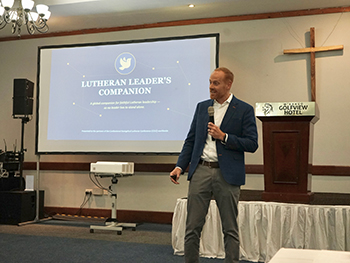
Part of my work involves exploring how digital tools can support gospel ministry around the world. This includes helping develop online learning opportunities, improving access to theological resources, investigating translation solutions, and assisting with projects like the Lutheran Leaderās Companion. The goal is not simply to build websites or use new technology. The goal is to support people who are carrying out gospel ministry in their local communities.
One of the most encouraging aspects of this work is seeing how God continues to open doors. Conversations that once would have required extensive travel can now happen across continents. Resources can be shared with people who may never have had access to them before. Leaders serving in very different parts of the world can learn from one another and encourage one another in their work.
At the same time, these opportunities remind us that the mission remains unchanged. Technology may change. Methods may change. Communication tools may change. But the message remains the same: Jesus Christ lived, died, and rose again to save sinners.

As we look toward the future, there are exciting opportunities to make resources more accessible, strengthen connections among church leaders, and support gospel outreach in new ways. We pray that God would bless these efforts and use them to strengthen his church wherever his people are gathered.
Thank you for your prayers and support of world missions. Through your partnership, the gospel continues to reach people across languages, cultures, and continents. It is a privilege to witness how God is using both traditional ministry and new opportunities to connect people with the saving message of Christ. Visit Lutheran Leaderās Companion to learn more.
Written by Jon Gross, missionary for the Multi-Language Production team.
Learn about the ministry work of WELS Missions.
Support the ministry work of WELS Missions.
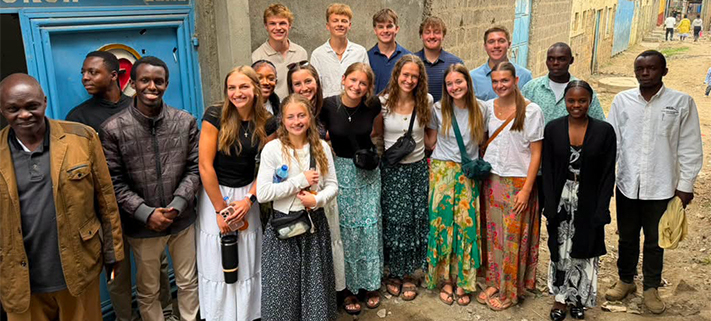
āPreach the Word,ā Paul told Timothy. Paul was in prison in Rome, facing execution for Jesus.
A joyful celebration in Lusaka
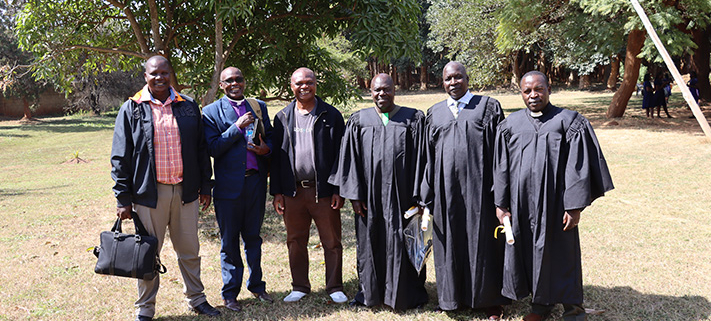
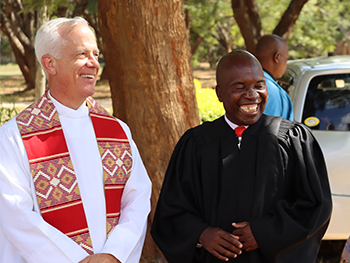
āPreach the Word,ā Harland Goetzinger, head of the Pastoral Studies Institute (PSI) of Wisconsin Lutheran Seminary, Mequon, Wis., told 15 other pastors from five countries, plus all the other pastors and other guests in attendance, on May 28, 2026, in Lusaka, Zambia.
Guests included Confessional Evangelical Lutheran Conference (CELC) synod leaders:
Guests also included:
The 15 pastors from 5 countries were graduating in the chapel of the Lutheran Seminary in Lusaka, Zambia, with Bachelor of Divinity degrees from Wisconsin Lutheran Seminary.
All of these men were already pastors before their bachelorās degree studies began. Classes took place in person just twice a year. That way, men could attend to their main duties and their families without faraway studies getting in the way.
Two past cohorts of the former Greater African Theological Studies Institute (GRATSI) received bachelorās degrees in 2014 and 2019. Those past graduates were all from Malawi or Zambia. The 2026 cohort graduating with their bachelor’s of divinity through the now Pastoral Studies Institute came from East, South, and West Africa!
Remember Godās patience
āPreach the Word,ā Professor Goetzinger told themāthe full Word of God, including the law in all its sternness and the gospel in all its sweetness.
āCorrect, rebuke, and encourageāwith great patience and careful instructionā (2 Timothy 4:2).
Great patienceāwhat a root of the gospel. And great patienceāwhat a fruit of the gospel.
āGreat patience,ā or ātotal patience,ā you could even translateāhow else could you describe the way God treated our first parents when they rebelled against him?
āNothing but patienceāāfinally, God sent his Son to be born in Bethlehem to save the world through him.
And once Jesus rose from the dead, why would he appoint someone like Paul to be his ambassador?
āI was shown mercy so that in me, the worst of sinners, Christ Jesus might display his immense patience as an example for those who would believe in him and receive eternal lifeā (1 Timothy 1:16).
One journey ends, another begins
Our 2026 graduates and visiting Wisconsin Lutheran Seminary professors showed great patience with their first-time program coordinator, the undersigned, when he made rookie blunders.
Visiting professors for this cohort over the years:
The 15 graduates also showed great patience during COVID-19-related delays, long bus rides and flights, internet woes, visa mix-ups, and other class-related difficulties.
They showed great patience through daunting learning tasks, personal financial struggles, family sorrows, and other disappointments. One graduate, Mesue Israel, cheerfully went through hip replacement surgery during his studies. God sent all such bad things for the good.
And now they are back in their classrooms and congregations, showing the same great patience by the power of the Holy Spirit to the glory of God.
They are serving the saints. They are training future leaders. They are exemplifying great patience in all the ups and downs of living in Africa.
They are teaching the gospel not only with their words but with their lives. They are modeling great patience for people who will, in turn, model the great patience of God to others, as Godās kingdom comes by Godās Spirit.
That is one reason why the last day has not come yet. God is so patient, not wanting anyone to perish, but everyone to come to repentance (2 Peter 3:9).
Africa has so many millions, especially in its biggest cities, who need to repent.
As we wrapped up graduation day together, I had all 15 men write brief thoughts on a sheet for each of the others: āOne thing I really appreciated about ____ during our time together was . . .ā
Sheets were passed around until they reached the man the others had written about. Then each man read at least one of his favorites. How we laughed. We treasured the descriptions.
We prayed, we sang, and we hugged. Then we went back to our homes in five different countries. The day for which we had waited so long had finally come.
But we are still all waiting patiently for a new day.
āOur citizenship is in heaven. And we eagerly await a Savior from there, the Lord Jesus Christ, who, by the power that enables him to bring everything under his control, will transform our lowly bodies so that they will be like his glorious bodyā (Philippians 3:20ā21).
Written by Dan Witte, missionary on the One Africa Team.
Learn about the ministry work of WELS Missions.
Support the ministry work of WELS Missions.
Sesquicentennial is not a word I use very often. It means 150th anniversary. Last week I attended a historic eventāthe sesquicentennial of the Evangelisch-Lutherische Freikirche (ELFK), our sister church in Germany. One hundred fifty years of blessings, challenges, baptisms, confirmations, weddings, funerals, sermons, and gathering around the timeless truth of Godās Word.

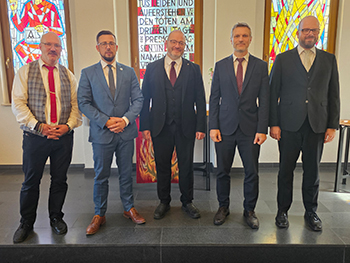
Newly installed Synod Council for the ELFK
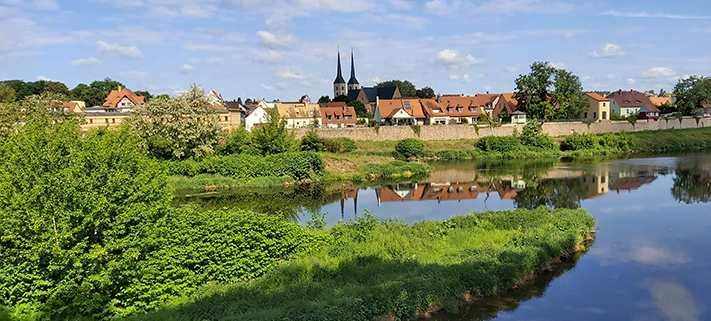
We gathered at Emmaus Congregation in Schƶnfeld, a small town in southeastern Germany, from June 12ā14. The first two days were devoted to the Synod Convention. Pastors, delegates, and guests heard reports about the work of the ELFK, discussed a keynote paper on āThe Certainty of the Resurrection,ā and elected new synodical leaders.
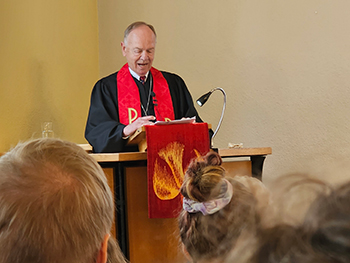
Sunday morning, a brass choir played hymns outside, calling us to worship. The hall was filled with worshipers from Greifswald in the far north to Wangen in the far south. A few foreign guests also joined the celebration, including WELS President Mark Schroeder. President Schroeder preached the festival sermonāin German! That was a special way to celebrate our fellowship with brothers and sisters in the ELFK.
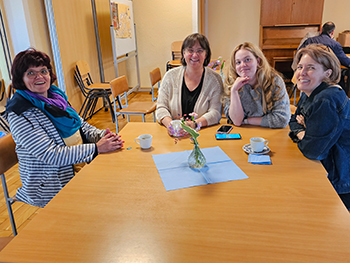
After the service, two hours were available for lunch and visiting before the afternoon convocation. I used the opportunity to talk with ELFK members about their favorite memories and impressions of the convention.
A pastor from Zwickau said he will always remember this convention because it was the first time a WELS president attended an ELFK conventionāand not only attended, but preached in German.
Two teenage girls from Leipzig were impressed by the sheer scope of ELFK ministries. There are opportunities for everyone to be involved.
A delegate from the Berlin area remembered studying at the ELFK seminary in Leipzig 25 years ago. At that time, the Hebrew professor lived a couple of hours away, so students would stay with him and his wife for weeks at a timeāor even an entire semesterāof intensive Hebrew study. Lifelong friendships and memories grew out of those weeks.

One current seminary student especially enjoys Gemeindetag and Kindersingwoche, two popular ELFK events. At Gemeindetag, members from across the synod gather for Bible study, worship, and fellowship at a church in Zwickau. He enjoys having members from all over the country in one place. āAll I have to do is turn around, and I have another person to talk with.ā At Kindersingwoche, children gather for a week of rehearsals and then perform a musical based on a Bible story. Seminary students help with chaperoning and devotions throughout the week.
Another seminary student appreciated not only the reports but also the responses from pastors and delegates. Sometimes the reports share great blessings, and sometimes they reveal difficult challenges, but the brothers always surround one another with support and encouragement.
During the closing service, the new Synodical Council was installed. Five leaders stood before the congregation. Five men whom weāve had the privilege to know, to varying degrees, during our three years here.
My first thought was, āWow, God has blessed the ELFK with really solid guys.ā
Then my thoughts turned to their parents, whom weāve also had the privilege to meet. These are salt-of-the-earth men and women who love their Lord and their church. Humanly speaking, one reason the ELFK just celebrated 150 yearsāand had no trouble electing five strong leadersāis because faithful parents taught their children about the Savior and instilled in them the joy and importance of gathering around Godās Word.
After lunch, I spoke with the parents of the new ELFK vice president, who live just down the hill from Emmaus Congregation. They have been ELFK members all their lives and met at a youth gathering in a nearby congregation. Their son was the first in the family to become a pastor.

The father fondly remembered Pastor Dƶhler, who served Emmaus Congregation throughout his long ministry. He encouraged young men to consider becoming pastors and was known for his Bible classes, especially with the children.
āIt was like a little piece of heaven,ā he recalled.
Letās thank God for our sister church, the ELFKāfor the blessings of gathering together, for fellowship with our brothers and sisters in Germany, for godly leaders, faithful parents, and happy memories. We on the Europe team thank God for the partnership we share with the ELFK, a partnership for the gospel, and we look forward to continued work together.
Written by Jennifer Wolfgramm, missionary on the Europe mission team.
Learn about the ministry work of WELS Missions.
Support the ministry work of WELS Missions.
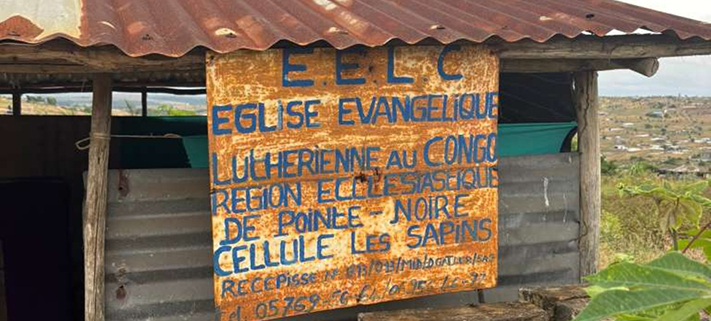
Last March, Missionary Howard Molhke and I made our first visit to a church in the Republic of Congo. The ROC, which is commonly referred to as Congo-Brazzaville, neighbors the Democratic Republic of Congo to the northwest. This is the first time ever that WELS missionaries have traveled to this country. The Eglise EvangƩlique LuthƩrienne du Congo-Brazzaville (EELCB) reached out to WELS and the One Africa Team because they wanted to remain a confessional Lutheran Church.

Searching the Scriptures
We met all 10 pastors in the EELCB. The WELSā process for establishing formal relations with another church body begins with a preliminary visit. In a preliminary visit, our goal is to learn as much as we can about a church body. Also, we provide information about the history of the WELS and working with the One Africa Team.
The first two days of our meetings were about their church. We also worked through the pamphlet, āWhat the Bible and Lutherans Teach,ā an overview of doctrine. We used this document to discover our common beliefs and to identify topics that need further study. We also studied Ephesians chapter 2 and discussed the practice of baptism.

Meeting the members
We visited four churches and met some of the members of EELCB. It was amazing to see their push to worship in places where they have only a roof and no real building. I am meeting online regularly with EELCB leaders to continue discussions. We are already making plans for future in-person meetings to continue our process of establishing fellowship.
The work in the ROC is a great example of the opportunities for outreach that God is presenting the One Africa Team here in Africa. We help church bodies that want to be confessionally Lutheran. In addition, we are pursuing relationships with churches that are already confessional Lutherans and desire contact with others. The One Africa Team is developing a large network of confessional Lutheran churches across Africa. This may have been the first time for WELS missionaries to visit the Republic of Congo, but it certainly will not be the last.

Written by Jake Vilhauer, missionary on the One Africa Team.
Learn about the ministry work of WELS Missions.
Support the ministry work of WELS Missions.
New seminary graduate Stephen Gerling and his wife, Hannah, will serve as one of two missionary families sent to a new mission in Senegal. Drawing from their unique international backgrounds and experiences growing up in mission fields, the Gerlings share their excitement, challenges, and hopes as they prepare to build relationships and share the gospel with the Wolof people in Senegal.
Veteran WELS world missionary Dan Kroll and his wife, Karen, will serve alongside the Gerlings as they minister to the Woloff tribe. Both Stephen Gerling and Dan Kroll will be commissioned by WELS Missions at Taste of Missions on June 13.
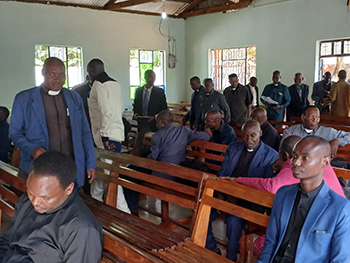
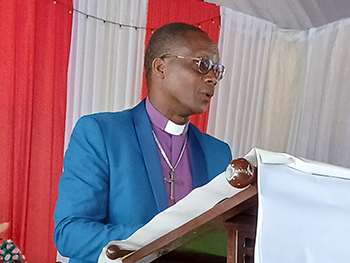
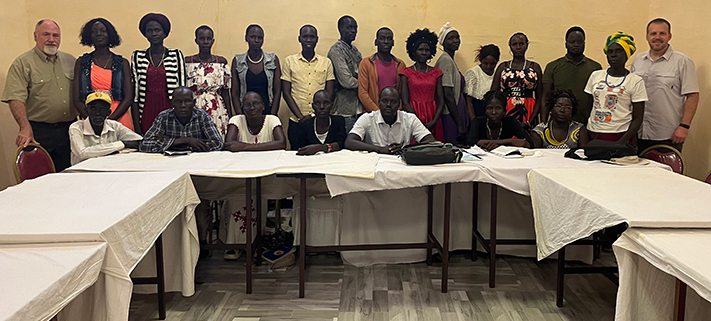
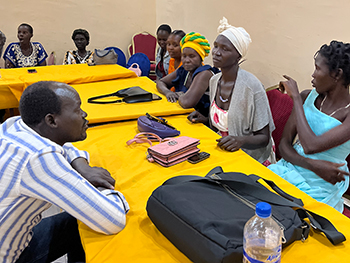
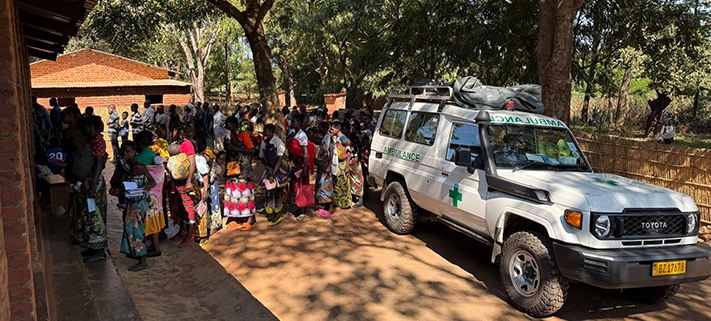
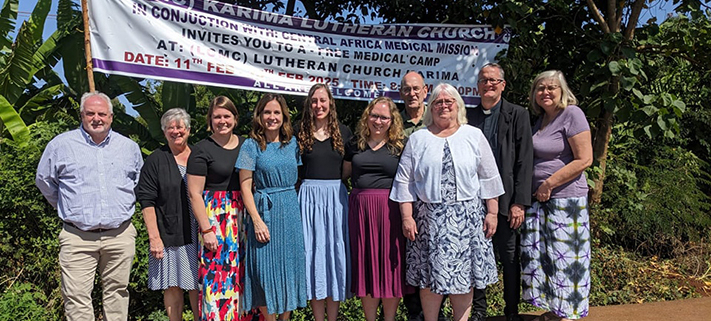
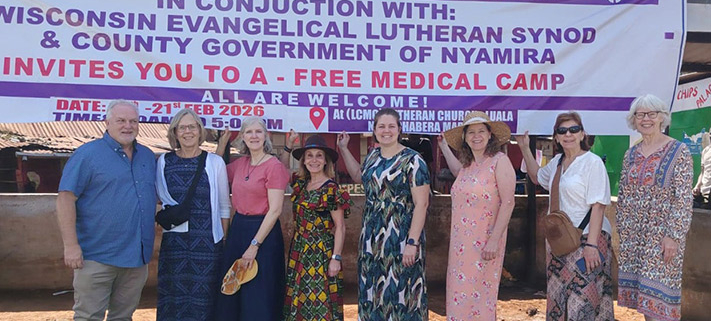
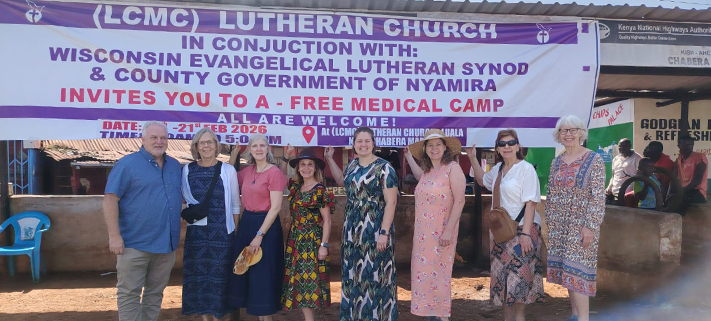
Working closely with the leadership and volunteers from the Lutheran Congregations in Mission for ChristāKenya (LCMC), the Central Africa Medical Mission (CAMM) organized a short-term medical camp in Chabera, Kenya, in February. Six WELS volunteers, along with Kate Wood, executive director of CAMM and Gary Evans, retiring field director, partnered with the Kenyan Health District in CAMMās third pop-up medical camp in Kenya. This first medical camp in the underserved Chabera area drew just shy of 2,400 children, women, and men in five days for free medical services, medical screening, and medication. Besides needed physical care, every patient received a gospel-based welcome, a printed booklet to take home, and often, individualized prayer. Read more about the camp at wels.net/welcome-to-kenya.

Have you ever reached into a pocket and discovered money you didnāt remember putting there? The discovery is completely unexpectedāand delightful.
First Impressions of CLSU
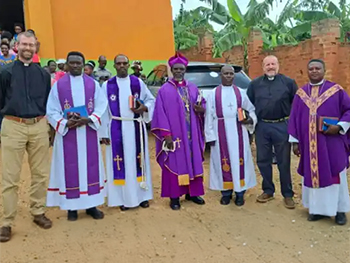
That is how I felt after a recent trip to Uganda to visit the Confessional Lutheran Synod of Uganda (CLSU). At the end of March, I accompanied One Africa Team missionary, Ben Foxen, on a visit to Ibanda, located in the western hills of the country. Because it was my first time representing the WELS Commission on Inter-Church Relations (CICR), I wasnāt sure what to expect. In the end, the experience far exceeded anything I could have imagined.

The purpose of our visit was to explore a potential partnership between WELS and the CLSU. Together, we studied CLSUās statement of faith and constitution, asking questions for clarification and deeper understanding. These discussions proved both productive and encouraging. The CLSU holds firmly to the Bible, teaching and preaching in accordance with Scripture. We share a strong emphasis on gospel ministry that keeps Jesus at the center. We pray for and look forward to the day when our synods can formally declare fellowship.
The CLSU consists of 40 congregations across Uganda, with approximately 3,200 baptized members. After analyzing the demographics of their congregations, their leadership has developed a clear plan for ministry. With nearly 80 percent of their members under the age of 18, they are focusing on youth ministry and strengthening catechism instruction. They are also working to expand access to education through their schools and are eager to encourage more young men to pursue seminary training and become pastors. In short, they have ambitious goals, coupled with a deep trust in Godās blessings.

Connected Through Christ
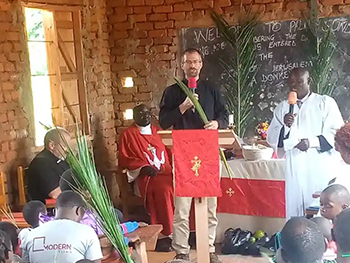
On a personal note, getting to know the members of the CLSU leadership team is something I will carry with me for years to come. Worship on Palm Sunday was a particular highlight. Witnessing the faith and dedication of these Christian menāand forming friendships with themāwas a remarkable joy. Though they live on another continent, I now count them among my dear Christian friends. Our time together lasted only a few days, but the memories will last a lifetime.
This trip also gave me valuable insight into the work of our One Africa Team missionaries. Watching Missionary Foxen interact with the CLSU was a joy and an encouragement. God is clearly blessing the efforts of our pastors in Africa as they seek out partnerships with groups like the CLSU. The Holy Spirit is powerfully at work through the Word, bringing souls into Godās kingdom. Uganda is a vivid example of the gospel as āthe power of God that brings salvation to everyone who believesā (Romans 1:16).

In the end, perhaps the unexpected joy of this trip should not have been so surprising. God is always at work, advancing his kingdom. I look forward to the day when believers from every nation will gather for an eternity in his presence. That joy will far surpass even the happiest unexpected discovery.
Written by Jon Bilitz, WELS CICR representative
Learn about the ministry work of WELS Missions.
Support the ministry work of WELS Missions.
Dear Fellow Member of WELS,
Easter reminds us that when everything seemed finishedāwhen the stone was sealed, and hope looked lostāthe risen Christ was already at work. Because Jesus lives, his gospel keeps moving forward, often in ways we donāt expect. Thatās what we see happening through the work of WELS World Missions today.
Across French-speaking regions of Africa, people are reaching out to WELS asking for help with Godās Word. And by Godās grace, we can respond.
French is an official language in 29 countries worldwide, and remarkably, 21 of them are in Africa. That shared language makes French a key connection point for gospel outreach across borders and cultures. In many of these places, faithful, Bible-based teaching is hard to find. Thatās why these contacts matterāand why the opportunities before us are significant.
One example comes from a French-speaking church body called Mission ĆvangĆ©lique LuthĆ©rienne au Congo (MELC). Its leaders searched for theological support, found WELS, and reached out because they wanted clarity grounded firmly in Scripture. They see the challenges around themāespecially the spread of false teachingāand they want to grow in the truth of Godās Word.
Faithful mission work in situations like this isnāt rushed. It involves careful doctrinal conversations, opening Scripture together, verifying unity in teaching and practice, and walking patiently with those who want to learn. This kind of work doesnāt always draw attention, but it is essential if the gospel of the risen Christ is to be proclaimed clearly and faithfully.
The work also requires flexibility. Because of political unrest, WELS missionaries cannot currently travel into parts of the Democratic Republic of Congo. Rather than stopping, conversations continue just across the border in Zambia, where it is safer to meet. There, missionaries and church leaders are able to build relationships, study doctrine together, and plan next steps. Trusting the Lordās guidance, the work continues.
To support this growing outreach, weāve made a focused investment in people and preparation. Missionary Jake Vilhauer, serving with the One Africa Team, received intensive French language immersionāincluding time living and studying in France and Cameroon. Because of that training, when French-speaking contacts across Africa reach out, we are ready to respond with clarity, compassion, and confidence in the gospel.
This is where you come in. We ask you to prayerfully consider supporting this work with a special gift. Your support makes it possible for WELS World Missions to carry out this work on the ground: engaging in careful doctrinal study, maintaining ongoing communication, and meeting face to face when those conversations matter most. And this need is not limited to one place. We are seeing similar requests for collaboration and support coming from countries like Burkina Faso, Cameroon, the Republic of the Congo, and beyondāall from people asking for faithful Lutheran teaching rooted in Godās Word.
As we celebrate Easter, we rejoice that Christ is risenāand that his living gospel continues to open doors in places near and far. Thank you for standing with WELS World Missions as we share that message throughout Africa.
In Christās service,
Larry Schlomer
Administrator, Board for World Missions
Prayer: Lord Jesus Christ, thank you for working through us in new and exciting ways. Bless Missionary Jake Vilhauer as he leads ministry efforts with French-speaking people in Africa. Guide our synodās process of working toward possible fellowship with the Lutheran church body in the Democratic Republic of Congo. We thank you for blessing our work with them so that they have been able to discover more great truths in your Word and combat false doctrine. May our French language outreach connect with many more people in the 29 French-speaking countries of Africa, so that even more may come to know the salvation you have earned for us. Amen.
āOur purpose is to build the Church.ā Unified under this call, Central Africa Medical Mission (CAMM) organized a short-term medical camp from February 10-14, 2026, in Chabera, Kenya. Executive Director Kate Wood and retiring Field Director Gary Evans led six WELS volunteers, coordinated with the leadership of the African Lutheran Congregations in Mission for Christ (LCMC), engaged LCMC church volunteers, and partnered with the Kenyan Health District in the third ‘pop-up’ medical camp in Kenya. The first medical camp in the underserved Chabera area drew just shy of 2,400 children, women, and men in five days, many arriving by foot, and some by motorcycle taxi traveling up to five kilometers (about 3.12 miles) for free medical services, medical screening, and medication.

āA cord of three strands is not easily broken.ā Our core team of 12 ‘strands’ included Paul Mboya, John Michoro, Pastor Sammy Mwangi, Bishop Onunda, and eight CAMM representatives from America and England. We flourished, unbroken, relying on collective strengths to witness Godās amazing provision in cross-cultural relationships and in Kenyaās rainy season, which arrived early, stirring up sticky, red mud. We weathered communication lapses that can happen when diverse cultures work together and faced a myriad of opportunities to meet the daily surprises, to us, unexpected, but God-undaunted! Creatively, we pivoted to address dwindling medicine supplies, giving urgent IV support when we lacked equipment, and transporting a critically ill patient to the hospital. We bonded in Godās diverse, resourced family!
āHis mercies are new every morning.ā The LCMC advertised the medical camp through flyers, word of mouth, and a couple of large banners at crossroads in the community. Kenyan medical professionals provided screening, consultation, and education, assisted by CAMM volunteers. The LCMC staged large event tents, acquired plastic outdoor chairs, and designated pathways with red twine to guide people through the camp for services. Every patient received a gospel-based welcome, a printed booklet to take home, and often, individualized prayer. Witnessing a pastor kneel and place his hands on the patient to pray framed possibilities for complete healing. When wind upended one tent, and pouring rain carved a stream through the pharmacy tent, Godās people scrambled and showed up with many hands and hearts to ensure everyoneās safety, righting chairs, and filling troughs with stone. We experienced Godās new mercies every day in Africa and hold fast to his mercy in deeper ways as we return home.

āRead your bible, pray every day if you want to grow.ā Simple lyrics Chaberaās church children sang during a three-hour worship service, lyrics that set the tone and rang through camp every day. The song welcomed ten first-time visitors the Sunday we worshiped together, and welcomed patients, young and old. Singing, beautified with hand motions, became our anthem, sparking Godās love and faithfulness despite fatigue, uncertainty, and at times, frustration. Pray for the Chabera church and community and stay tuned to see how God continues to bless them.
Written by Janet McElvaine, member at Beautiful Savior Lutheran Church in Everett, Wash.
Learn about the ministry work of WELS Missions.
Support the ministry work of WELS Missions.
Think, Evaluate, Learn, Lead (TELL) program students across Africa gather faithfully online to study Godās Word together. They meet through video calls, discuss Scripture in WhatsApp groups, and grow in their understanding of the gospel and Lutheran doctrineāall without ever being in the same room. That changed in October, when students from across Kenya gathered in Nairobi for two TELL seminars. For the first time, students who had only seen each other on screens were able to greet one another face to face.

Missionary Jake Vilhauer (L) and Missionary Joel Hoff (R)
Over two Saturdays, participants dug deeply into Scripture, studying how Baptism is not merely a symbol but a powerful means of grace through which God forgives sins, creates faith, and brings people into his family. Together, they explored passages such as Titus 3:5ā7 and Romans 6:3ā4, seeing clearly how Baptism connects believers to Christās death and resurrection.
For some students, these truths were not new, but they were renewedāmade clearer and more precious through careful study and discussion. For others, it was their first time hearing the biblical teaching on Baptism as a gift from God rather than a work of man. One student expressed it this way: āI now understand that Baptism is something that God has done for me and not something I do for God.ā
The seminars also served as an opportunity for students to learn more about the next steps in the TELL program. TELL is designed to help believers grow in the Word and prepare them to share Christ in their own communities. During the sessions in Nairobi, students heard how they could continue in the program by becoming growth group leaders and gather small groups of new learners with the goal of studying Godās Word together and sharing what they have learned through TELL.
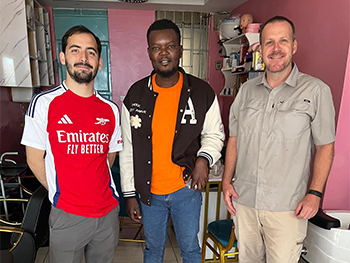
Several of the attendees are already meeting regularly with TELL counselors. They are working toward doctrinal agreement and preparing for service as church planters in their communities. These men and women are eager to bring the message of Christ crucified and risen to people who have not yet heard the good news of forgiveness and life through Jesus. One of those students is Noah Nyagara. Noah moved to Nairobi from west Kenya. He works at a salon and is eager to share the gospel with those who live in the slum areas of Nairobi.
We thank God for providing this opportunity for TELL students to meet in person, grow, and prepare for service in his kingdom. We also give thanks to the many WELS pastors and congregations who support the TELL ministry through their prayers, offerings, and teaching. The Lord is using this ministry to equip his people in Africa to share the gospel boldly and bring the light of Christ to their communities. By Godās grace, many more souls will hear the pure gospel and be led to faith in Jesus as their Savior from sin.

We donāt yet know how far each student will go in the TELL program. Some may study online for a time and then take what theyāve learned to strengthen the congregations where they serve. Others may continue through the full program and go on to become church planters, sharing Christ with the new groups they gather.
But one thing we do know is this: because these students share one faith, one baptism, and one Lord (Ephesians 4:5), by Godās grace they will one day meet once again face to face in heaven.
Written by Joel Hoff, TELL missionary to Africa
Learn about the ministry work of WELS Missions.
Support the ministry work of WELS Missions.
This article originally appeared in the One Africa Team blog. Subscribe to future updates from Africa at oneafricateam.com.
On February 7-16, 2026, Missionaries Dan Witte and Dan Kroll visited a group of Christians in Buchanan, Liberia. The One Africa Team has been working with a church there called Lamb of God. Three years ago, Lamb of God left another local group that was teaching false doctrine. They are currently a single congregation due to their unwillingness to compromise on doctrinal matters. Missionary Dan Kroll shares an update:

The building site of Lamb of Godās new school
Making progress one step at a time
Lamb of God has been making slow but steady progress for quite some time. We expect more congregations to form in the near future. We have reviewed extensively Lutherās Small Catechism as well as the Lutheran Confessions. We have seen our Liberian brothers make progress in securing property. They are now building a school in a developing area of Buchanan. This is very likely to bring opportunities for outreach to the community. We have also developed some excellent relationships here and have made inroads into the unique culture of Liberia.
Many groups of Christians approach WELS with a request to join our fellowship. For eight years, the One Africa Team has been using a process to evaluate these requests. In Liberia, under the guidance of Pastor Toye Barnard, we started with what has become known as āThe Liberia Plan.ā The plan includes a requirement that new groups join the TELL online Bible school. They must also submit monthly reports via the internet and send weekly sermon notes for evaluation and revision.
This week, we reviewed the Constitution of Lamb of God Lutheran Church. We also did a bit more in-depth review of their āStatements of Faith.ā This allowed the congregation to show that they are united with WELS in their understanding of the Holy Scriptures. We discussed at length the ministerial practices of the congregation. We saw that these teachings are not just words but are effective for building Godās Kingdom here in Liberia.
Partnering with TELL
In an effort to train lay leaders, we spent two days studying the TELL (Think. Evaluate. Learn. Lead.) method. This method offers a clear template of questions that fit well with any Scripture narrative. Pastor Barnard has been using the TELL method for many years. TELL is his go-to method for Bible studies and sermons. Three of his members are currently enrolled in the TELL program. Our Liberian brothers can see the TELL program in action. They are able to use it for any outreach and home visits they make in the area. It has been a very busy week in Liberia!
Next week, the One Africa Team Outreach Committee will review Lamb of Godās constitution and statements of faith. The One Africa Team will pass on Lamb of God Lutheran Churchās official documents to the WELSā Commission on Inter-Church Relations (CICR). Please join us in thanking God for using the Liberia Plan to bring Lamb of God closer to fellowship with WELS!
Written by Rev. Dan Kroll, One Africa Team missionary
Learn about the ministry work of WELS Missions.
Support the ministry work of WELS Missions.
From Feb. 15ā21, 2026, WELS Director of Missions Operations Stefan Felgenhauer traveled to Dakar, Senegal, to help prepare for the placement of WELS missionaries in this new mission fieldāincluding confirming details for the language and culture immersion program that will be the first step for incoming missionaries. While there, he also explored key logistics for long-term service, including immigration guidance, housing research, and practical cost of living and medical considerations.

Simone (L), Stefan Felgenhauer (center), and Rouba (R)
Missionary Dan and Karen Kroll have accepted the call to serve in Senegal, where their initial focus will be learning the Wolof language and adjusting to daily life as they prepare for longer term gospel outreach among the Wolof people, a group that has had very limited exposure to Christianity.
A central part of Stefanās week was spent at Africa Consultants Internationalās Baobab Center, where he learned more about the immersion experience and confirmed how it would work in practice. At the center, he met with Simone, the language coordinator, and Rouba, the homestay coordinator. Together, they walked through what daily life will look like during immersion. Rather than living independently, missionaries will stay with a Senegalese host family, sharing three meals each day and using Wolof as the primary language in the home. Weekdays will also include s

Africa Consultants Internationalās Baobab Center
tructured language learning, with four hours each morning spent working one on one with a Wolof tutor at the center.
Stefan also observed how immersion students gather at the centerās Jokkoo KafĆ©āWolof for āto come togetherāāa space where students can debrief, build relationships, and process cultural experiences together. While there, he spoke with current students from the United States and Canada, who shared their experiences learning the language and navigating daily life in Senegal.
To better understand living conditions, Stefan visited several potential host homes and met the families who have welcomed immersion students for many years. With the help of translators, they described how students often become part of the family and how those relationships sometimes continue long after the immersion experience ends.

Along the way, Stefan experienced everyday Senegalese hospitality, including a traditional meal of Yassa Poulet, hibiscus juice, and attaya, a sweet mint tea commonly shared in social settings.
Please keep Stefanās ongoing work in your prayers, and ask the Lord to bless Dan and Karen Kroll as they prepare for this next chapter of service in Senegal.
View additional photos from Senegal.
Learn about the ministry work of WELS Missions.
Support the ministry work of WELS Missions.
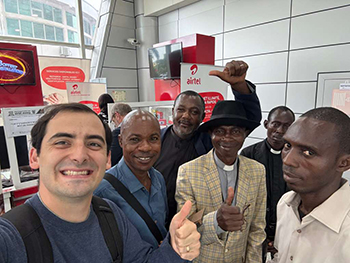
Let me share an incredible story from Kisii, Kenyaāa story of transformation, faith, and collaboration.
It begins with a boy who grew up never hearing about Jesus in his church. Everything changed when he attended a Christian school. There, his teacher spoke about the good things Jesus had done, and curiosity sparked in his heart. Over time, that boy learned more about Jesus and eventually felt a deep desire to share the gospel with others.

That boy is now Pastor Kenedy, a faithful leader who gathers and shepherds two congregations in Kisii. Whatās remarkable? Over 80% of the people in these congregations are former Mormonsājust like Pastor Kenedy himself.
His title doesnāt come from a seminary degree but from years of dedicated service, guiding people with Godās Word. But Pastor Kenedy and his group wanted more. They longed to understand Scripture better so they could clearly share the truth with othersāespecially those questioning or leaving Mormonism.
Thanks to the blessing of the internet, they connected with Truth in Love Ministry (TILM). TILM is an organization committed to communicating the gospel to people with a Mormon background. For the past couple of years, Pastor Mark Parsons from TILM has been meeting regularly with Pastor Kenedy and other leaders online, offering instruction and encouragement.

While these virtual meetings were fruitful, it became clear that a deeper connection was needed. Thatās where the WELS One Africa Team (OAT) stepped in. In November, my wife Leslie and I traveled to Kenya to meet Pastor Kenedy and his congregations in person. Over several days, we gathered with more than 200 men and women to review the basics of Christian faith and to discuss what collaboration OAT can offer to local ministries in sharing the gospel.
The result? A renewed sense of mission and plans for ongoing collaboration between TILM, OAT, and our partner churches in Kenya. Together, we aim to strengthen outreach to Mormons and equip local leaders for this important work.
Please keep Pastor Kenedy, his congregations, and all these ministries in your prayers. Your continued financial support makes this possibleāand we are deeply grateful.
Learn about the ministry work of WELS Missions.
Support the ministry work of WELS Missions.
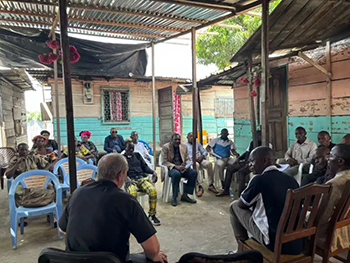
Planning is a risky business. We donāt know the future. We take our best guesses and try to do everything possible so that something goes according to plans weāve made. However, all of that still falls far short of guaranteeing the outcome. God reminds us: “Now listen, you who say, āToday or tomorrow we will go to this or that city, spend a year there, carry on business and make money.ā Why, you do not even know what will happen tomorrowā (James 4:13-14).
God’s plans always prevail

The Africa Mission Evangelism Church (AMEC) is a Lutheran church of about 13,000 souls in Tanzania. Plans for a declaration of fellowship with AMEC didnāt come to fruition at our recent synod convention. There was a sudden leadership change and a delay on AMECās side in accomplishing some tasks. Plans that had been made were put on hold. WELS and AMEC mutually decided it would be better to take a little bit more time before proceeding.
God warns us about putting too much hope in our own plans. He also spoke through Jeremiah: ā ‘For I know the plans I have for you,’ declares the LORD, ‘plans to prosper you and not to harm you, plans to give you hope and a future’ ” (Jeremiah 29:11). Though our plans might not work out, Godās plans always do. He knows what he has in store for all of us, and we know that his plans are good.
I donāt doubt that his plans for the relationship between WELS and AMEC are good as well. We have made progress even in the short time since the delay. It looks like we will be ready to move forward with AMEC sooner rather than later. During a recent visit to Tanzania, Missionary Roebke and I witnessed good teaching by the leaders of AMEC. They explained to the rest of their called workers a locally written, Swahili-language confession of faith. The called workers thoroughly discussed many of the points in the confession. In the end, 65 men voiced their agreement that these are the things they believe and practice. This was a decision the WELS missionaries certainly rejoiced to hear.

Planning our move to Tanzania
Because of these developments, the One Africa Team has decided to relocate two mission families to Arusha, Tanzania. Missionary Roebke and I will be able to focus on training future church workers in AMEC. Through a program of classroom instruction and practical ministry application, we are planning to train a select number of AMEC men. Those men will become trainers of future gospel workers within their church body. Our prayer is that these men will be able to pass the same kind of training on to others in AMEC. God willing, this will ensure a good future supply of gospel workers for their church body.
Such an endeavor requires even more planning. We are currently working with local lawyers to register our mission organization in Tanzania in order to obtain work permits. The missionary families will be leaving their old residences and searching for new ones. Missionaries are making efforts to maximize Swahili language learning when on the ground. The One Africa Team is weighing how these changes will affect the responsibilities of each member of the team. Our utmost concern is securing our families’ welfare in an area where weāve never had WELS missionaries.

Thereās a lot to think about and plan for but also a lot to be gained. As with everything we do in life, we make our plans as best we can. At the same time, we trust that Godās plan is the one that will actually be accomplished. God will reveal in time how our planning lines up with his plan. We will continue to trust that whatever he has in store, it will be good. We know his planning is good for our missionaries and their families, for AMEC, for WELS, and ultimately, for the kingdom of God. All glory to his name for his marvelous plan!
Written by Ben Foxen, missionary on the One Africa Team
Learn about the ministry work of WELS Missions.
Support the ministry work of WELS Missions.
āThe program has helped me much to grow in my understanding of the gospel and help me know how I can share it with others,ā says Opiew Adiew.
Opiew is from Gambella, Ethiopia. Heās a TELL student who not only has completed all of the online courses that make up the TELL Network Christian leader training program, but he also led a recent online recognition service. The recognition service celebrated 72 students for completing eight or more courses. Thirty-eight of those students have finished the full 13-course Discipleship track. The recognition service is usually held once per quarter; this recent Zoom room gathering included Joel Hoff, our TELL missionary, and One Africa Team teacher Dan Kroll along with TELL team members to help facilitate. Each student is individually highlighted among their peers throughout the service. Witnessing a TELL student lead and share in this way was heartwarming and encouraging for all the TELL teachers and students in attendance.
Opiew has served as a visionary founder of Gambella Evangelical Lutheran Church with some others who had realized that their churches’ teachings were not in line with Scripture. Opiew says, āI had been looking for a church with whom we could workāa mother church. God connected me with WELS. When I requested to join WELS, they connected me to Pastor John Hartmanāat that time the outreach leader of the One Africa Team.ā
Pastor Hartman encouraged Opiew to join WELS’ Multi-Language Productions (MLP) TELL leader training program. āI enjoyed the TELL classes because the instructor allows, even invites, students to share their thoughts. The program has helped me much to grow in my understanding of the gospel and help me know how I can share it with others. I use the TELL method to share the Word of God in Bible study and in my preaching still today,ā says Opiew.
MLPās TELL Network has had some notable successes in the last quarter. God is truly blessing our efforts, and the TELL team continues to refine our proven process. Since the recognition service, 40 more students have completed eight or more courses, and 18 more have finished the Discipleship level. Even more exciting is that two of our Discipleship graduates, both leaders in Lagos, Nigeriaāserving different groupsāare now teaching The Four Key Concepts (a Bible study on sin, grace, faith, and works) to their own students. This a wonderful example of multiplication in action!
Because of the continued growth of our higher-level study body, we’re working on ways to scale the administration of our current student experience even more. New Doctrine Discovery courses are now in production to bring even more students at one time to becoming group leaders who are also in doctrinal agreement.
TELL has eight students leading groups in six different countries! We expect that number to increase to 32 by the end of 2025. Praise God for these men in training. And please continue to pray for these students as they grow and share the gospel.
Written by Nate Seiltz, director of Multi-Language Productions
Learn about the ministry work of WELS Missions.
Support the ministry work of WELS Missions.
This article originally appeared in the One Africa Team blog. Subscribe to future updates from Africa at oneafricateam.com.
A pastor who visits people makes people who visit church. Thatās why I devoted two nights a week to visit both members and visitors when I lived in the United States. Sometimes I would call ahead; most times I just showed up at the door. I only got a gun pulled on me onceābut thatās how he greeted everyone.
I donāt make house calls anymore because I donāt have a congregation. However, every other month Iām on the road. My father asked me, āIs it necessary to visit all these people?ā Itās true that we can handle a lot of our work online. But this post will show why we visit in person.
I just returned home after a two-week visit to Uganda, where we partner with the Obadiah Lutheran Synod. We are also pursuing relationships with two new groups. One is called the Confessional Lutheran Synod of Uganda (CLSU). Two years ago, conservative pastors broke away from the Lutheran Church of Uganda. They formed their own church body and seminary and are seeking a partnership with WELS.
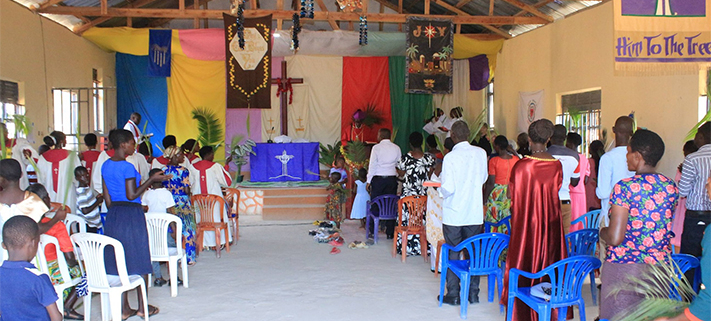
Missionary Ben Foxen and I were greatly encouraged by what we saw during our visit. Members of Christ the Vine enthusiastically welcomed us. We worshiped in their newly constructed sanctuary, constructed of mud and wattle and roofing sheets. We witnessed baptisms, confirmations, and the installation of four congregational evangelists. They were greatly honored by our visit.
We also visited Mt. Calvary congregation, whose members worship in a schoolroom. Several CLSU congregations have started schools as a means to reach out to the community. Bishop Benson Barahuka, the leader of the CLSU, joined in the dancing and fun. He asked the members to contribute toward a church building project. A visit like ours shows that every member and congregation are valued and connected to the body of Christ.
Missionary Foxen and I sat down with CLSU leaders for a week to study Lutheran teachings and practice. I had met some of them previously, while leading an online course on the Augsburg Confession. We all agreed that meeting face to face is better. Bishop Benson thanked WELS donors for making our visit possible. He told us, āYou care.ā He was glad we made a visitāand so are we.
The other group we are working with in Uganda is the Evangelical Church of the Augsburg Confession Uganda (ECACU). This group also came out of the Lutheran Church of Uganda. Rev. Simon Peter Waako is their leader.
At our opening worship service we sang from The Lutheran Hymnal (TLH), which had been donated by LCMS congregations in the U.S. The tunes we sang did not always match what was printed in the hymnal. Almost all of the long meter (LM) hymns were sung to the tune of āI Know that My Redeemer Lives.ā
The liturgy was conducted in the Runyoro language, although not everyone in attendance spoke that tongue. Throughout our visit, everything we spoke in English had to be translated twice. This slowed us down considerably. Did you know that more than 3,000 languages are spoken on the African continent?
Our visit to God Bought congregation was also a challenge. Our van got stuck in the mud and we had to walk the last kilometer to the church site. A small group of Christians gather every Sunday under a tree. The owner of the adjacent property evicted them from their building because he wants to farm crops there.
The next visit was to Kakasato church, which has 50 members. A local man invited ECACU to start a congregation in his barn. They offer Sunday school and Bible class in addition to worship. We also made a visit to Kabatindule, which means āfelling a tree.ā The congregation meets under a lean-to on the property of one of the members. They do not have any Bibles, catechisms, or hymnals.
Our visit showed us thereās a lot of work to be done with ECACU before we declare fellowship. Thereās no way we could know this without coming in person. This is why we visit. And God willing, we will make another visit soon.
Written by Missionary John Roebke, missionary on the One Africa Team
Learn about the ministry work of WELS Missions.
Support the ministry work of WELS Missions.
The work of the Central Africa Medical Mission (CAMM) in Malawi extends far beyond the clinic walls of the four villages of Suzi, Mwalaulomwe, Thunga, and Msambo that we serve. While nurses, clinic staff, and volunteers work tirelessly to care for patients during clinic hours, the commitment of the staff doesnāt end thereātheir service continues long after the last patient has been seen.
The Malawi Ministry of Health requires CAMM to regularly submit detailed reports. These reports include the number of patients seen, ailments treated, and cases referred to government healthcare facilities. This ongoing collaboration ensures transparency and reinforces CAMMās vital role in conducting healthcare in Malawi. For example, the most frequent ailment we saw in April was malaria (1,533 patients) followed by the common cold (1,030 patients). This data is reported on the monthly and annual reports.

All prescriptions, medications, and medical equipment are stored onsite in the clinicās pharmacy in Lilongwe. Once a month, staff conduct a thorough inventory to track what supplies were used and identify any shortages. Violet Chikwatu, nurse in charge, and Lusungu Mwambeye, clinic administrator, play a key role in compiling reports, submitting required documentation, and restocking essential medications. Lusungu often contacts multiple pharmacies to secure necessary stock at the best available prices.
For the Under-Five program, the clinic provides wellness checks and immunizations for all children under five years old. Staff ensure each childās health record is up to date and that vaccines are stored securely and correctly to maintain effectiveness. In April alone, the clinics in Malawi saw more than 4,000 children in the Under-Five program.
We are incredibly grateful for the dedicated staff of the Lutheran Mobile Clinic in Malawi. Their attention to detail, compassion for every patient, and unwavering commitment to excellence reflect the mission of providing āChrist-centered healthcare that supports the gospel.ā Their work is a true blessing to the communities we serve.

We thank all of our supporters who help keep our medications and supplies readily available. Whether itās through financial contributions for purchasing prescriptions or sending packages filled with pill bottles, sunscreen, and other essential itemsāwe are truly blessed by your generosity.
If youāre interested in supporting CAMMās mission, visit their website at camm.us. Your partnership helps us continue providing life-changing, Christ-centered healthcare to those in need.
Written by Angela Sievert, Central Africa Medical Mission chair
Learn about the ministry work of WELS Missions.
Support the ministry work of WELS Missions.
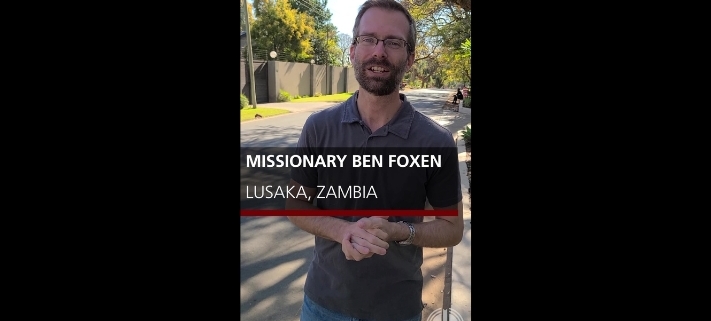
Missionary Ben Foxen shares an update from Lusaka, Zambia about the work being done with churches in Tanzania and Uganda! One of these churches includes the Africa Mission Evangelism Church (AMEC), which is in the process of reviewing doctrine and working towards declaring fellowship with WELS. Hear more from Missionary Ben Foxen about his work for the One Africa Team.
P.S. – Follow us on Facebook and Instagram to watch even more videos from our missionaries in the upcoming weeks!
Nutrition challenges in Mwembezhi
Lutheran Mission Rural Health Centre stands as a beacon of hope for communities that face limited access to healthcare and resources. For many families, it is the first and sometimes only line of defense against malnutrition and its far-reaching consequences. At the heart of these efforts lies the Nutrition Department, a dedicated team working tirelessly to ensure that no child or mother is left behind in the fight against hunger and poor nutrition.

Mwembezhi Lutheran’s catchment area is predominantly rural, with most households relying on subsistence farming for both food and income. Seasonal food shortages, poor diets, and widespread poverty often make it difficult for families to provide consistent balanced meals. Limited awareness about proper nutrition further contributes to high rates of undernutrition, stunting, and micronutrient deficiencies among children under 5. Nutrition is not just a health issue; it’s a barrier to education and overall community development. Recognizing these challenges, Mwembezhi Lutheran Mission Rural Health Centre has a nutrition segment to help in early detection and treatment of malnourished children. We do clinical care, education, and community engagement to create lasting change.
Nutrition services at Mwembezhi
1. Growth monitoring and promotion (GMP)
We provide regular weighing and height checks for children who are under 5. Growth monitoring helps us detect early signs of malnutrition and intervene before problems escalate. Caregivers receive personalized counseling on age-appropriate feeding, hygiene practices, and how to make the most of locally available foods. Early childhood development (ECD) services are integrated into GMP, allowing us to assess developmental milestones and ensure that children are not only well fed but also mentally stimulated through play, laying the groundwork for a healthier future.
2. Management of acute malnutrition
Children presenting with moderate or severe acute malnutrition are given life-saving care. This includes Ready-to-Use Therapeutic Foods (RUTF), High Energy Protein Supplements (HEPS), and close follow-ups to monitor recovery. Children with medical complications are referred for inpatient treatment to ensure that no case falls through the cracks.
3. Maternal and child education and counseling
Expectant and breastfeeding mothers receive essential information on maintaining a balanced diet during pregnancy and lactation. Health talks emphasize exclusive breastfeeding for the first six months, timely introduction of complementary foods, and continued breastfeeding up to two years and beyond. Mothers are also encouraged to incorporate nutrient-rich locally available foods into their family meals.
4. Community outreach and awareness campaigns
Beyond the clinic walls, the staff and community health volunteers work hand-in-hand with villages. They conduct home visits, follow up with at-risk families, and lead cooking demonstrations that teach caregivers how to prepare balanced meals using locally available foods. These outreach activities not only extend the reach but also foster trust and awareness in the community.
5. Integration with other health services
We work together with Maternal and Child Health, HIV care, diabetes and hypertension clinics, and immunization programs. Late last year, one notable success story was of a diabetic patient who was on the verge of giving up life due to his condition. Through consistent counseling, dietary monitoring, and regular blood sugar checks, his glucose levels were brought under control solely through proper nutrition. Remarkably, he has maintained normal blood sugar levels for more than eight months without the need for medication. This integrated approach demonstrates that nutrition is not treated in isolation but as part of a broader continuum of care, addressing both the immediate and underlying causes of poor health.
The human impact
Beyond every statistic lies a story. Mothers who once feared losing their children to malnutrition now return to the center with healthy, thriving toddlers. Caregivers often share testimonials about how simple lessons on meal preparation and hygiene have transformed their family’s health. In October of last year, 1,700 children under 5 were screened for malnutrition, and 12.6 percent (214) were found to be moderately malnourished and 1.8 percent (31) were severely malnourished. This represented an overall malnutrition rate of 14.4 percent. Following close follow-ups and interventions, moderate cases reduced from 214 to 17 (92.1 percent reduction), severe cases from 31 to 6 (80.6 percent reduction), and the overall caseload from 245 to 23, marking a 90.6 percent overall improvement.
All the achievements in nutrition programs are a result of your support, help from CAMM, and the efforts of our dedicated staff.
Looking ahead
Despite successes, challenges remain. Persistent poverty, cultural feeding practices, and seasonal hunger continue to put families at risk. We will continue to encourage parents to bring their children for growth monitoring and promotion, ensuring that no child misses essential health services.
Written by Jackson Kalewka, clinical officer in charge
Learn about the ministry work of WELS Missions.
Support the ministry work of WELS Missions.
This article originally appeared in the One Africa Team blog. Subscribe to future updates from Africa at oneafricateam.com.
The apostle Paul once wrote to Timothy, āThis is a faithful saying: If a man desires the position of a bishop, he desires a good workā (1 Timothy 3:1, NKJV). In other translations, the word bishop is rendered āoverseer.ā Regardless of the term used, the role carries the same weight: to care for Christās church, to faithfully teach Godās Word, and to lead with humilityāmuch like a father guiding his family. Paulās words remind us that this is indeed a noble calling.
A historic day in Arusha
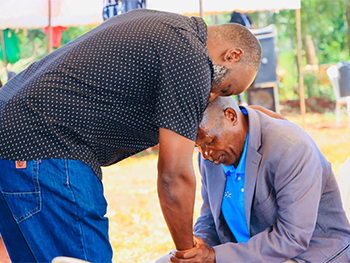
On Sunday, June 29, 2025, just outside Arusha, Tanzania, a significant milestone was reached. After 17 years of faithful service, Bishop Baltazar Kaaya (pictured above, right) of the Africa Mission Evangelism Church (AMEC) consecrated Pastor Judah Pallangyo (pictured above, left) as the newly elected bishop. Bishop Pallangyo has long been a dedicated servant within AMEC, having served both as a pastor and as secretary of theological training.
AMEC and WELS: A growing relationship
In recognition of the growing relationship between WELS and AMEC, Missionary Howard Mohlke was invited to attend the consecration. The relationship between AMEC and WELS began in 2020 through online conversations with Pastor Makundi Davis, leader of the Kilimanjaro District. The following year, WELS Missionary John Hartmann visited Tanzania, marking the beginning of a deeper partnership.

Over the past four years, WELS missionaries and members of the Commission on Inter-Church Relations (CICR) have met regularly with AMEC leaders, pastors, and elders. These meetings have focused on studying Scripture together and exploring whether a shared confession of faith existsāone that could be publicly affirmed through a declaration of fellowship.
A pause for reflection
Originally, it was hoped that a formal declaration of fellowship could be made at the 2025 WELS synod convention. However, as is often the case in ministry, plans can shift. Bishop Pallangyo has requested more time to revisit the statements of faith with AMECās pastors and elders before moving forward.
While this delay may be disappointing to some, it is also understandable. A new bishop stepping into such a pivotal moment naturally wants to ensure unity and clarity among his church leaders.

Looking ahead with hope
Even now as of this writing, further meetings for study among the pastors and elders of AMEC are scheduled, as well as meetings to discuss the future work of WELS with AMEC. We pray for Godās guidance and blessing on these discussions and on the future of AMECās relationship with WELS. May this new chapter under Bishop Pallangyoās leadership be marked by wisdom, faith, and fruitful collaboration.
Written by Missionary Howard Mohlke, leader of the One Africa Team.
Learn about the ministry work of WELS Missions.
Support the ministry work of WELS Missions.
Last month, my husband Gary and I visited Malawi and Zambia over 11 days, meeting with our leaders and staff and visiting clinics. This was my third trip to Africa in the three years since Gary and I returned to the United States. Gary had also been to Kenya to start preparations for our 2026 medical camp, and then joined me in Malawi. We stayed in the apartment adjoining the house in Lilongwe and were able to see just how our Clinic Administrator, Lusungu Mwambeye, is capably handling the challenges of running the Lutheran Mobile Clinic. One example is how she arranged for surveys to be done of all four of the clinic properties to obtain government leases and prevent people from encroaching on the properties. We were there for the monthly staff meeting, and saw everyone diligently working together on monthly inventory and statistics, so that Violet Chikwatu, Nurse in in Charge, could complete the government reports for May. Violet and Lusungu continue to work well together and keep things running smoothly.
Going out to the village clinics is always my favorite part of these visits. It was obvious that the many outpatients seen in a day reflected the recent higher numbers in our monthly reports. I noticed that some patients had been seen at local government clinics and prescribed medicine that they were told to obtain at our clinics, because those clinics didnāt have any. I observed the nurses at the pharmacy station calmly giving numerous injections and intravenous medications for children and adults who were seriously sick with pneumonia, asthma, and infections. There were several referrals to the hospital in Lilongwe. I saw in Violetās record where in one day, eight patients were referred, mainly with severe pneumonia which is common in the cold season. These people depend on the preventative care and lifesaving treatment which the Lutheran Mobile Clinic provides. We are thankful that the Central Africa Medical Mission (CAMM) is able to afford the essential medications, and that Violet works hard to find them in pharmacies around Lilongwe. Most importantly, we know that our patients also hear the soul-saving message of the gospel.

Moms waiting for the under-fives clinic
I was still impressed with howādespite seeing 150-200 patients along with the under-fives, antenatal, family planning, nutrition and HIV testing/counseling clientsāthe clinicians and nurses worked cheerfully and efficiently as a team. The same volunteers which helped us through COVID were still doing blood pressure checks, malaria tests, weights, and directing patients to the proper lines. Violet stepped in to help in whatever station she was needed. The nurse-midwives were happy to receive a new fetal doppler we had brought, to more easily hear the infant heartbeat of our antenatal clients.
One of the highlights at Msambo clinic was being able to see all five of the children with disabilities who still receive regular physical therapy, and their mothers. All are continuing to make progress in mobility or speech. One little girl named Lontira who was born with a very deformed spine and has had difficulty sitting, is waiting for surgery. Her mom told me she will go to a hospital in Blantyre when the specialists come to Malawi to do these complicated procedures. She is a member of the Lutheran church in Msambo. We pray for her brave mom, and for Lontira to have a successful surgery, which will improve her mobility.
After a busy week, we flew to Zambia. We spent time with Alisad Banda, Clinic Administrator, who drove us out to Mwembezhi for a day at the Lutheran Rural Health Center. The staff warmly welcomed us as they prepared for under-fives and diabetic clinic (pictured above). We spoke with Future Beloyi, our nurse who recently completed midwifery training. She was also happy to receive a new fetal doppler for use with antenatals. We also spoke with Muzundwase Chikwekwe, a nurse who would soon start her midwifery training for the next 18 months. The clinic will benefit from having two Lutheran nurse-midwives, with about 150 deliveries at clinic in the past year.
We met with Jackson Kalekwa, clinical officer in charge, and Anthony Kasonga, laboratory technician, to discuss topics like the need for more space for maternity patients and a separate laboratory area for TB patients. Anthony is the chairman at Martin Luther Church, adjacent to the clinic. We learned that he has been instrumental in growing church attendance to about 100 people each Sunday, including many clinic staff members, despite there being no permanent pastor. Alisad also holds Bible studies for staff on a regular basis. Crispin Chikonka, the clinicās psychosocial counselor, gives a devotion for clinic attendees each morning. The clinic now has a second clinical officer, Samalani Nyirenda, who works as a clinician alongside Jackson. We were glad to meet him in person and know that he was a welcome addition to the team.
Thatās the update from the field! Gary and I joined three other CAMM committee members in attending the Lutheran Women’s Missionary Society (LWMS) Convention in Tulsa, Okalhoma, the last weekend of June. It was a joy to meet fellow CAMM supporters and speak with those who might be new to the medical mission. They have good questions and ideas for how to communicate about the mission and support our staff and patients. Thank you all so much for continuing to show your love for the work of CAMM and being faithful in prayer!
Written by Beth Evans, former nurse in charge for CAMM
Learn about the ministry work of WELS Missions.
Support the ministry work of WELS Missions.
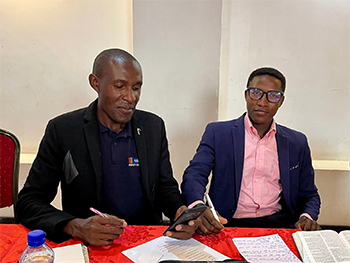
Greetings in the name of our Lord, Jesus Christ, from the Lutheran Mobile Clinic in Malawi as we faithfully serve the communities of Msambo, Suzi, Mwalaulomwe, and Thunga. This month has been marked by God’s continued provision as we maintain our weekly schedule: Tuesday visits to Msambo, Wednesday outreach to Suzi, Thursday services at Mwalaulomwe, and bi-weekly Friday visits to Thunga. Through these consistent efforts, we’ve provided essential outpatient care, nutrition support, HIV testing and counselling, antenatal care, and child growth monitoring to thousands of community members who might otherwise lack access to quality healthcare
It’s June 2025, which means we are halfway through the year! It feels like yesterday when we were celebrating the New Year. We are so grateful for Godās love through all these months. As we are halfway through the year, we are also at the end of CAMM’s fiscal year, and it’s time we reflected on the challenges and opportunities at personal, organizational, national, and global levels. We need to rethink development and global issues. Let us begin by reflecting on recent reductions to U.S. foreign aid, as well as aid from the United Kingdom and the European Union. This has affected many local and international NGOs and has led to aid programs being cut, often leaving little to no assistance for those in need.
At Lutheran Mobile Clinic, we used to benefit from the U.S. malaria initiative, from which we could receive malaria control, diagnosis, and treatment supplies. Most years we treat around 16,000 cases of malaria. Malaria can be particularly life threatening or disabling in children. Prior to the cuts to USAID, we received a good supply of malaria testing kits and the malaria drug we call LA. As the cuts to USAID went into effect, we saw the district hospital requests to ration supplies with other public hospitals who did not have malaria treatment supplies. We had plenty of supplies and were happy to share them with facilities who had little. To date we have not seen a sustainable plan from the Malawi government to provide malaria treatment supplies, and we fear we may have to purchase them from local pharmacies. We have also noted an increase in the number of patients at our clinics. The ability of public hospitals and clinics to provide medications has worsened, with little or no medication available and high prices for consultation and medications at private clinics. People prefer to wait for the Lutheran Mobile Clinic to provide care and medication that is affordable and available. As if this is not enough, Malawiās poor credit has spiked the rate of inflation which was already around 15% before the credit troubles. The prices of goods and commodities are through the roof, including medications, which makes life very tough for people earning maybe $50 to $100 per month.
In as much as things are not good, we are grateful for how we have managed our expenses at the mobile clinic, and we expect to come in just under budget when our fiscal year ends in late June. As a country, we need to develop strategies and thoughts on the aid structure and how we are going to reduce dependency. We need serious social and economic independence and not just political independence. This makes us value the Lutheran Mobile Clinic’s social and economic efforts and the support that we have from you all in the U.S.
Our HIV testing and counseling services have shown remarkable progress across all four clinic sites, reflecting broader national trends as Malawi advances toward achieving the 95-95-95 HIV targets. The reduced stigma we’ve witnessed demonstrates God’s healing power working through dedicated service. These achievements embody Christ’s command in Matthew 10:8: “Heal the sick, raise the dead, cleanse those who have leprosy, drive out demons. Freely you have received; freely give.” Our child growth monitoring and antenatal care programs have revealed both challenges and victories during this dry season, made possible through the generous support of our faithful donors. The funds you’ve provided have enabled us to purchase essential medical and nutrition supplies and maintain our vehicles for reliable community access, while your clothing donations have brought dignity and warmth to families facing economic hardship. Your donated pill bottles have proven invaluable for organizing medications and ensuring proper dosing for various conditions across all four clinic sites. As Proverbs 31:20 teaches us, “She opens her arms to the poor and extends her hands to the needy.” Your contributions have become instruments of his healing grace, enabling us to nurture life from conception through childhood and honor his precious gift at every stage.
May God bless you all for supporting the Central Africa Medical Mission (CAMM).
Written by Lusungu Mwambeye, clinic administrator at the Lutheran Mobile Clinic in Malawi
Learn about the ministry work of WELS Missions.
Support the ministry work of WELS Missions.
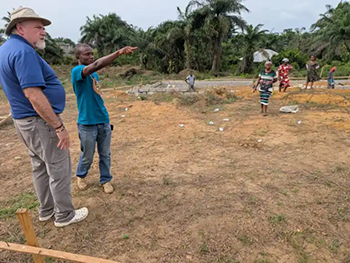
What do you get when you add together three Ugandan synods, two missionaries from the One Africa Team, and one representative from our WELS Commission on Inter-Church Relations (CICR)? A spiritually uplifting and productive cross-country journey!
At the beginning of April, Missionaries Foxen and Mohlke traveled to Uganda, rented a car, and struck out on unfamiliar roads to meet with representatives of two church bodies, or synods, who were seeking a relationship with WELS.
A synod in western Uganda
The first of these was the Confessional Lutheran Synod of Uganda (CLSU), headquartered in Ibanda in the hilly regions of western Uganda. The area was extremely pastoral, with beautifully green pasturelands and lots of cows. The leaders of the CLSU proved to be equally pastoralāvery attentive to the spiritual needs of their people and eager to meet those needs to the best of their ability.
We visited a number of the local congregations and also got to see the site of their functioning seminaryāa simple two rooms that housed a small library and a number of crowded bunks for students. A nearby church hall serves as their classroom.
The CLSU serves about 3,000 members with the gospel. Their seminary program has 7 students who will be graduating this December, with another 12 students ready to join the next intake.
A synod in central Uganda
After our time in Ibanda, we set out on the road again and headed east for eight hours to arrive in Jinja in central Uganda, on the north banks of Lake Victoria, one of the sources for the Nile River. Here, we met with representatives from another synod, the Evangelical Church of the Augsburg Confession in Uganda (ECACU). Though smaller than the CLSU (it serves about 950 members), we found them to be no less eager to share the truth of Godās Word with others in their communities.
A large focus of their strategy for reaching out is schools, which they organize in communities that lack them. They then organize congregations out of the people making use of the schools. Their largest school serves about 300 children.
Our visits with the leaders of both ECACU and CLSU were very encouraging when it came to discussing our respective beliefs about Scripture and their focus on gospel ministry. We are looking forward to continuing discussions to see if fellowship with these synods will be possible.
The Obadiah Lutheran Synod
After our time was done with ECACU, we drove back to the airport, where I dropped off Missionary Mohlke and picked up MLC Professor Nicholas Schmoller, who also serves on the WELS CICR. The two of us then drove farther east, past Jinja to Bugiri, where our brothers in the Obadiah Lutheran Synod (OLS) are located.
We were meeting with them to help them organize a written confession of faith, which would be used as they apply for membership in the Confessional Evangelical Lutheran Conference (CELC), the worldwide fellowship of churches of which WELS is a part. We spent three days with Pastor Musa and other leaders of the OLS, studying Scripture and putting on paper articles of faith especially important to them for their churches, communities, and context. The Lord blessed our work and allowed us to accomplish everything in the time we had available.
So, after 16 days on the road and about 1,300 kilometers driven, what did we have to show for it? New friendships established, old friendships reaffirmed, and more opportunities to marvel at the grace of our Lord Jesus, who makes us his coworkers in the ministry of his gospel! May he continue to bless our work with these three Ugandan synods!
Written by Ben Foxen, missionary on the One Africa Team
Learn about the ministry work of WELS Missions.
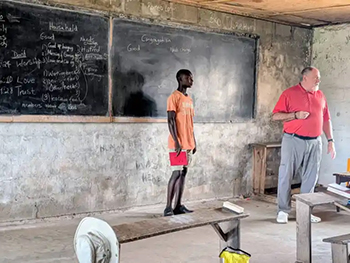
Support the ministry work of WELS Missions.
Last December the clinic lost one of our members of staff, a nurse/midwife by the name of Mayase Banda. Mrs. Banda had worked at the clinic for 13 years. On Sundays, she would attend Martin Luther Church, which is on the grounds of the clinic. Pastor Titus Mbele conducted her funeral service. Is there anything one can talk about that happens without God being involved? I am not sure of anything, but one thing is that God exists everywhere and, at the end of the day, there is nothing that happens for no reason. She was one of the senior nurses, and we appreciate her work and time spent at the clinic.
Working as a member of the administrative staff at the Lutheran Mission Rural Health Centre, I am grateful for Godās grace. The facility has seen people come to the health center from as far as 15 kilometers to seek medical services, and we have heard people say, āWe came this far because the medicines in this facility are prayed for and we trust that we shall find the help.ā Others still say because of the name of God they trust they will be healed.
Appreciating God is acknowledging that while we were lost in sin, God did everything according to his plan to save us from the powers of Satan and power of death and indeed purchased us with his blood. Jesus Christ suffered death for the whole world to be saved. It’s a gift worth appreciating. Maybe a question would be this: How do we show appreciation for what God has done in our lives? How do we as individuals, parents, children, families show this appreciation? When you are alone and look around at how far God has brought you, do you pause for a moment and appreciate him?
Appreciating God comes in many ways. I would rather raise a generation that will have fear for the Lord at all times. There are times when I see children who do not always live as God and their parents have taught them to live.
Finally, it would be a great thing if children would be encouraged to maintain the legacy of a Christian family, so that even when the parents are gone the faith will remain. As people, we discuss how well-mannered the children are, but sometimes I find it difficult to help families realize that they could do more to help their children to be faithful, truthful, honest.
I ask that you continue to pray for families and children and encourage them to grow strong in their faith.
Written by Alisad Banda, clinic administrator in Zambia
Learn about the ministry work of WELS Missions.
Support the ministry work of WELS Missions.
Greetings in the name of our Lord Jesus Christ. We are in the season of Lent, where we reflect on the suffering and death of our Lord. Isaiah 53:4,5 says, “Surely he took up our pain and bore our suffering, yet we considered him punished by God, stricken by him, and afflicted. But he was pierced for our transgressions, he was crushed for our iniquities; the punishment that brought us peace was on him, and by his wounds we are healed.ā This passage reminds us that the punishment and suffering of our Lord Jesus Christ brought us everlasting life and forgiveness of our sins.
This monthās newsletter tells the story of Smith Patulani, an under-5 child who is a patient at our Msambo clinic. Smith was born in October 2023 at Daeyang Luke Hospital in Lilongwe. According to Smithās mother, Modester Patulani, Smith was born through a normal spontaneous vertex delivery, and there were no complications during birth and throughout the postpartum period. The family of Mr. and Mrs. Patulani hails from Kabula village, Traditional/Authority Chimutu in Lilongwe District. The village is not far from our Msambo clinic.
In February 2025, Smith got sick. He was presenting with fever, vomiting, and general body weakness. Upon seeing this, his parents took him to a local hospital, the Chankhungu Health Center. Chankhungu Health Center is one of the government health centers close to Smithās village. At Chankhungu, Smith was tested for malaria, and the result came out positive. He was given a first line malaria treatment (lumefantrine artemether), which he took for three days at home, and he got well.
One Monday morning in early March, Smithās father discovered that Smithās lower limbs were not functional. He informed the mother, and they were both shocked, knowing that the child was fine after completing his malaria treatment in February. They then visited the Lutheran Mobile Clinic at Msambo on 17th March 2025, where they met one of our clinical officers, Davie Khumula.
At the clinic, Davie asked the mother some questions, including the medical history of the child. The mother explained everything and of course the malaria that he had in February. Davie also asked if the child received the polio vaccine, and the mother said the child completed all the vaccines, including the polio vaccine. The child was then examined for any possible signs of malaria, and there were none. Davie then examined the childās legs for muscle strength, reflexes, and muscle tone.
He found that the muscle strength and reflexes were absent, and there was decreased muscle tone. Davie then explained more about the childās condition to the parents, his plan of referring him to a hospital, and its importance. Smith was then referred to Kamuzu Central Hospital for further investigation for the possible cause of the paralysis, management, and initiation of physiotherapy treatment. We look forward to hearing more from Smithās parents and how he is coping with physiotherapy treatment.
Lastly, we would like to extend our heartfelt gratitude to all the people who think about us. Your prayers keep us going. Your various donations have been of great impact to us, and that is why we keep running. May the good Lord continue blessing you and all that you do. As we journey through this season of Lent, may we embrace reflection and renewal, fostering a spirit of compassion and gratitude in our hearts.
Written by Violet Chikwatu, nurse in charge
Learn about the ministry work of WELS Missions.
Support the ministry work of WELS Missions.
HYPERTENSION AT LUTHERAN MISSION RURAL HEALTH CENTER (MWEMBEZHI)
The hypertension program started when the clinic saw the need. Patients were traveling to hospitals in Lusaka (the capital of Zambia) for drugs refills. This is about 50 miles from the Mwembezhi area. Due to lack of funds, most of the patients were unable to travel to Lusaka. In 2004, we had seven patients who suffered strokes in our catchment area; of those, three of them died the same month because of hypertension. Seeing the need, we began the program for those who were not able to go to Lusaka for treatment and medications.
The program began with only ten patients. The number has kept on increasing so much that now we have 561 hypertensive patients. To make sure we attend to patients in line with the Ministry of Health policy, members of staff sat and started a special blood pressure clinic one Saturday per month. Since Saturday is not a working day, it helped members of staff to decongest patients on treatment days. On Blood Pressure day, all members of staff report for work at 8:00 a.m. Blood pressure check-ups are done. We have essential hypertension (the diastolic blood pressure between 90 to 99mmHg) and crisis hypertension (the diastolic blood pressure above 100mmHg). All patients with essential hypertension are given their monthly drugs refill. Patients with crisis hypertension are admitted for observations. They can only be discharged when their blood pressure stabilizes. If it fails to stabilize, we refer to the hospital for investigations and further management.
However, hypertension has no signs and is not painful. As a result, it is very difficult to convince patients to take drugs for life. Some older people still believe in witchcraft. In 2019, we lost one Village Headman who came to clinic because of an abscess. He was also found to have hypertension. He was given drugs for the abscess and hypertension, but when the abscess healed, he refused to take the hypertension drugs. He said he cannot continue taking drugs. After four months, he was brought to the clinic with a stroke. We referred him to the hospital, but the hospital could not help. After his death and burial, Mr. Kalekwa called for a meeting with the Village headmen to explain his death. Headmen who believed in witchcraft saw the need for taking hypertensive drugs. The senior headman told other headmen to stop believing in old beliefs. He said they should always work hand in hand with health personnel to avoid disease complications. All the headmen promised to educate their citizens.
Drugs for hypertension are purchased by our clinic administrator, Mr. Banda, through the help we get from CAMM. The clinic staff work hard to provide good quality health services to all hypertensive patients. We start every morning with devotion and a prayer, followed by health education. All hypertensive patients are happy with and appreciate the services we provide.
May the almighty God bless you all in helping the poor in Zambia.
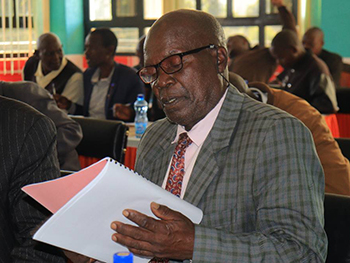
Written by Jackson Kalekwa, clinical officer in charge
Learn about the ministry work of WELS Missions.
Support the ministry work of WELS Missions.
On Pentecost, the Holy Spirit gave each of Jesusā disciples the ability to speak in a foreign tongue instantly. God tied three thousand people to himself in one day through the message they proclaimed in their listenersā mother tongues. Would the results have been similar if the disciples had preached in Greek or Latin? On Pentecost, God did more than perform a miracle. He displayed his love for people of every tongue and tribe.
Speaking to someone in their heart language does more than convey information. If you speak three sentences to someone in his native tongue, you will instantly establish trustworthiness. You show that you are committed to your listenerās culture and language. Your tongue ties you to his community.
Time to teach the tongue
More than three thousand languages are spoken in Africa. People speak some of them within their ethnic group. Other languages like English, French, Arabic, and Swahili cross tribal boundaries. Most people speak at least two or three languages. There are some similarities between languages of the same family (like Bantu, Nilotic, or Khoisan), but it still takes time to learn any language.
God has given me an aptitude for picking up foreign tongues. My experience speaking Chichewa for seven years in Malawi has helped me speak Swahili at a basic level. Swahili is spoken primarily in Tanzania and Kenya and in some parts of the Democratic Republic of the Congo and Uganda.
Before my last trip to Kenya and Tanzania, I found a Swahili-speaking Malawian who teaches at a local language school. My wife and I met with him in January. We have both studied some Swahili independently but made significant progress with our teacherās instruction. And this helped us immensely the next month when we traveled to Kenya.
Home advantage
WELS Central Africa Medical Mission sponsored a rural health clinic near the town of Sagana in central Kenya. My wifeās job was to weigh patients and calculate their body mass index. I sat with the local pastors who shared Jesus with visitors in both Swahili and Kikuyu, a Bantu language spoken by people in central Kenya.
I am thankful for my brothers in Christ who shared the gospel in their native tongue. At one point I was left alone, and I struggled to communicate with our camp visitors. Local Kenyans will always be able to connect with their fellow Africans more easily than I can. I am glad that God gave them the desire to share Jesusā love with others.
The week after the medical camp, my wife and I traveled to western Kenya. We offered a preaching workshop near the town of Kisii. The participants were laymen who lead worship services and laywomen who are leaders of small group Bible studies. Few of them had received formal ministry training in an academic setting. These people serve congregations of the Lutheran Congregations in Mission for Christ-Kenya (LCMC-Kenya). Due to a shortage of ordained pastors, the church relies on laymen to lead worship services in many of its congregations.
My class led members through the process of preparing a sermon from beginning to end. I presented my material in English, and they worked through various learning tasks in their local tongues. My prayer for these men and women is that they proclaim Christās love to their fellow Kenyans no matter what tongue they are speaking.
Tongue twisters
At the end of our two weeks in Kenya, my wife flew back to Malawi. I continued to Tanzania to meet with pastors from theĀ Africa Mission Evangelism Church (AMEC). WELS and AMEC intend to tie themselves together in fellowship at this summerās WELS synod convention. Along with my fellow Missionary Ben Foxen, we presented topics of special interest to AMEC pastors. As English is not used as widely in Tanzania as it is in Kenya, Ben and I did our best to teach our lessons in Swahili.
Ben held up his end of the communication well, partially as a result of the two months he spent studying Swahili in northern Tanzania. For my part, I communicated at a kindergarten level. It wasnāt pretty, but you do whatever you can and leave the rest to God.
On Sunday morning, our hosts asked both Ben and me to preach in their churches. It is an expression of the ties that bind our two church bodies together. We eagerly embraced the opportunity, even though I relied on Google to translate my sermon from English into Swahili. I know enough Swahili to recognize and change the mechanically-translated parts. I twisted my tongue around familiar and unfamiliar words as I read the sermon to my listeners. An occasionally-shouted āAmen!ā indicated when they got my point.
Now back in Malawi, I have a plan to meet with my Swahili teacher. I hope to visit our friends in Kenya and Tanzania in the upcoming months. I want to move from being tongue-tied to having a tongue that ties others to Christ.
Written by John Roebke, missionary on the One Africa Team
Learn about the ministry work of WELS Missions.
Support the ministry work of WELS Missions.
The WELS Commission on Inter-Church Relations (CICR) has the responsibility of overseeing our synodās relationships with other Lutheran church bodies in the United States and around the world. The vast majority of the commissionās time is spent strengthening the bonds of fellowship with our sister church bodies. But the commission also monitors what is going on in other Lutheran church bodies with which we are not in fellowship.
The CICR also communicates with Lutheran church bodies that are seeking fellowship with WELS. In recent years, discussions with such churches have led our synod to declare fellowship with Lutheran churches in Ethiopia, Kenya, and Uganda.
This beautiful trend continues as the worldwide fellowship expands. After several years of detailed doctrinal discussions between WELS representatives and the Africa Mission Evangelism Church of Tanzania, the CICR is recommending that our synod publicly and officially declare fellowship with the Africa Mission Evangelism Church at this summerās synod convention. Such celebrations of newly established fellowship are always one of the highlights of a synod convention.
The Africa Mission Evangelism Church is a growing Lutheran church body that separated from its previous affiliation because of doctrinal reasons. It consists of 12,000 members in 78 congregations and is served by approximately 65 pastors. The head of the Africa Mission Evangelism Church is Bishop Baltazar Kaaya. Bishop Kaaya will be attending our convention this summer to tell us more about our new partner in Africa.
We thank God that he continues to build his church.
Serving with you in Christ,
WELS President Mark Schroeder
N16W23377
Stone Ridge Drive
Waukesha, WI 53188
By accepting this message, you consent to our cookies on this device in accordance with our cookie policy found in the WELS Privacy Policy, unless you have disabled them.